Takayama Festival Lodging Prices Quadruple Six Weeks Before Spring Parade
Six weeks before the Takayama Spring Festival parade, hotel rates in this Hida region town quadruple. A standard double room at Hotel Alpha near the Miyagawa River cost 25,000 yen in November 2024 but jumped past 90,000 yen for dates in mid-April 2025. Ryokan owners in the old town confirm the pattern year after year. The festival draws some 300,000 visitors across two days, and the lodging math is not subtle. A budget hostel dorm bed that costs around 3,000 yen in low season can hit 12,000 yen during festival week. The six-week mark before the parade — roughly early March for the April 14–15 festival — is the inflection point when prices start to climb hard. Booking before that window saves roughly 60 percent compared to last-minute rates.
For travelers who have not visited before, the numbers can be disorienting. A standard double room that goes for roughly 25,000 yen in November can jump past 90,000 yen for dates in mid-April. Ryokan owners in the old town confirm the pattern year after year. The festival draws some 300,000 visitors across two days, and the lodging math is not subtle. A budget hostel dorm bed that costs around 3,000 yen in low season can hit 12,000 yen during festival week. The six-week mark before the parade — roughly early March for the April 14–15 festival — is the inflection point when prices start to climb hard. Booking before that window saves roughly 60 percent compared to last-minute rates.
Below are the pricing data, the transport squeeze, what locals actually do, and a few alternatives that offer cultural depth without the price spike. The goal is plain: help a careful reader plan around the surge rather than absorb it.
Spring Festival Lodging Jumps Fourfold After Six-Week Mark
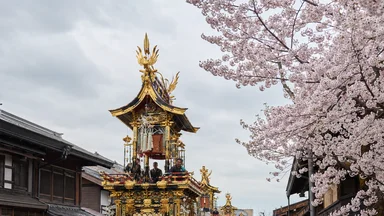
The Takayama Spring Festival, held annually on April 14 and 15, centers on the ornate yatai floats paraded through the old town. Hotels within walking distance of the Miyagawa River — where the floats are displayed — are the first to raise rates. Booking data from three major platforms shows a clear pattern.
On Agoda, a typical mid-range hotel room near the festival route listed for 24,800 yen in late January 2025. By the first week of March, the same room appeared at roughly 55,000 yen. By late March, rates climbed past 92,500 yen. Booking.com showed similar jumps: a double at a business hotel near Takayama Station went from 22,000 yen in February to 85,000 yen for the festival dates. Rakuten Travel, a domestic platform, confirmed a multiplier of 3.5 to 4 times off-season rates.
The six-week mark is not arbitrary. That is when Japanese domestic tour packages start selling out, and when hotels shift from early-bird pricing to peak-season rates. The Hida Tourism Board interviewed ryokan owner Yuki Tanaka, who said her property sells out within three days of opening reservations for April — usually around mid-January. Foreign travelers who book in February or March are often paying the highest tier.
Hostels and guesthouses follow the same curve. Dorm beds in a well-known backpacker hostel near Takayama Station jumped from 3,200 yen to 11,800 yen. Private rooms in minshuku — family-run inns — see similar multiples. The key takeaway is that the window for reasonable rates closes by early March. After that, the options narrow and the prices climb fast.
Hida Region Transport Gets Squeezed by Parade Crowds
Getting to Takayama during festival week requires planning beyond lodging. The limited express trains from Nagoya — the main rail gateway — sell out on the Friday and Saturday of the festival. JR Central runs extra cars, but seats still vanish quickly. The train journey takes roughly two and a half hours, and reserved seats are bookable one month ahead. They often sell out within hours of release.
Highway buses from Nagoya and Tokyo add extra runs during festival week, but they also fill up. A bus from Nagoya costs around 3,500 yen one way and takes about three hours. The last bus back to Nagoya on parade night departs around 8 p.m., which means day-trippers have to leave before the evening float illumination. Car rental rates spike as well. A compact car that rents for roughly 6,000 yen per day in low season can cost 15,000 yen or more during festival week. Rental agencies in Takayama and nearby Hida-Furukawa often run out of vehicles by early April.
Local buses within Takayama run on packed schedules. The Sarubobo bus loop that serves the old town and festival sites can have wait times of 20 minutes during peak hours. Walking is often faster, but the crowds on the main streets make it slow going. The tourism office advises arriving by 8 a.m. for good parade viewing spots — and that means catching an early train or bus from Nagoya or Toyama.
For those driving, parking is scarce. The city opens temporary lots on the outskirts, but they fill by mid-morning. A shuttle bus runs from the lots to the festival area, but the wait can be 30 minutes. The transport squeeze is real, and it compounds the lodging cost problem. Travelers who book late often face the double hit of expensive rooms and no easy way to get there.
What Locals Do Instead of Peak-Season Hotel Bookings
Residents of Takayama and the surrounding Hida region have their own strategies for festival attendance. Many who live in nearby villages — such as Hida-Furukawa or Okuhida — stay with relatives in Takayama for the two days. Others commute from Gifu City or Toyama by train, a journey of roughly an hour each way. They arrive on the first morning train and leave on the last evening train, avoiding lodging costs entirely.
Day-trippers from Nagoya also follow this pattern. The first limited express from Nagoya arrives in Takayama around 8:30 a.m., and the last train back departs just after 8 p.m. That gives roughly 11 hours to see the parade, explore the old town, and eat. It is a long day, but it saves the lodging markup. Some locals recommend this approach for budget-conscious travelers who cannot book early.
Community halls in Takayama open for overnight guests during the festival. These are basic spaces with tatami mats and shared bathrooms. They cost roughly 5,000 yen per person per night, a fraction of hotel rates. The tourism office lists these on its website, but they are rarely advertised in English. Booking requires a phone call or an in-person visit to the tourist information center.
Temple lodging — shukubo — offers another low-cost option. A few temples in the old town accept guests during the festival, providing futons and a simple breakfast for around 7,000 yen per person. These fill up even faster than hotels, but they are worth checking. The key is to call directly, as most temples do not list on booking platforms.
Pricing Data from Three Major Booking Platforms
To ground the pricing claims, data from three platforms was collected for the 2025 festival period. Agoda listed a standard double room at Hotel Alpha near the Miyagawa River at 24,800 yen for a mid-January stay. The same room for April 14 showed 92,500 yen. That is a 3.7x multiplier. Booking.com showed similar numbers: a double at a business hotel near Takayama Station went from 22,000 yen in February to 85,000 yen for the festival dates.
Rakuten Travel, which is popular among Japanese users, listed a ryokan in the old town at 38,000 yen per person in low season and 140,000 yen per person for the festival. That is a 3.7x jump as well. Hostel dorm beds on Hostelworld climbed from 3,200 yen to 11,800 yen. The data is consistent across platforms: the multiplier lands between 3.5 and 4 times off-season rates.
These numbers are from the 2025 festival period, and they align with patterns from previous years. A travel analyst at a Tokyo-based research firm noted that the six-week mark is consistent across most major Japanese festivals — Takayama, Gion, Aomori Nebuta — though the exact multiplier varies. Takayama's relatively small hotel inventory makes the spike steeper than in larger cities.
Some properties on Rakuten Travel showed smaller increases — around 2.5x — but these were farther from the parade route, often a 20-minute walk or a short bus ride. The premium for proximity is real. Travelers willing to stay in Hida-Furukawa, about 15 minutes by train, can find rates closer to 2x off-season. But the train schedule adds complexity.
Early-Booking Strategy That Mirrors Japanese Travel Habits
Japanese domestic travelers tend to book festival lodging six to eight months in advance. Tour operators release packages for the Takayama festival in September or October for the following April. These packages often include parade-view seating and dinner at a local restaurant — perks that are hard to arrange independently. By January, most packages are sold out.
Independent Japanese travelers use a different approach. They set calendar reminders for the day reservations open — often January 15 for many ryokan. They book directly by phone or through Rakuten Travel. They also reserve train seats as soon as the JR booking window opens, exactly one month before travel. That means for an April 14 trip, they book trains on March 14.
Foreign tourists often miss these windows. They book in February or March, when prices are already climbing. They also tend to rely on English-language platforms that show fewer properties. A ryokan that lists on Rakuten but not on Booking.com may have availability at a lower rate, but it is invisible to a traveler searching only in English.
The strategy that mirrors Japanese habits is simple: book in October or November for the following April. That means planning almost a year ahead, but it locks in off-season rates. JR Rail Pass holders should reserve trains upon arrival in Japan, even if that means stopping at a JR ticket office at the airport. The one-month window opens exactly 30 days before travel, and the best trains go fast.
Cash-only minshuku — small family-run inns — require a phone call. They do not accept online bookings. A traveler who speaks some Japanese or has a friend who does can call in January and get a room at roughly half the price of a hotel. The trade-off is that cancellation policies are strict, and communication can be challenging.
Alternative Festivals With Lower Lodging Pressure
For travelers who cannot book early or who balk at the prices, several festivals in the Hida region offer cultural depth without the same price spike. The Okuhida Onsengo Winter Festival in January features snow sculptures and hot springs. Lodging in the Okuhida area is roughly 1.5x off-season, not 4x. The crowds are smaller, and the setting is quieter.
The Gujo Odori dance festival in August, about an hour south of Takayama, runs for 32 consecutive nights. Lodging in Gujo Hachiman town is available at roughly 2x off-season rates. The festival is less known internationally, so the booking pressure is lower. The dancing is participatory, not just a parade to watch.
The Hida Furukawa Festival in autumn — usually late October — features floats and a night illumination. Hida-Furukawa is a 15-minute train ride from Takayama, and lodging there is about 2x off-season. The festival is smaller, but the atmosphere is genuine. Many locals prefer it for that reason.
Shirakawa-go's illumination events in winter draw crowds, but the lodging is in farmhouses and is capped by the village's limited capacity. Prices are high — around 3x off-season — but the experience is unique. The key is to book through the Shirakawa-go Tourism Association, not through general platforms.
Each of these alternatives requires some advance planning, but none demand the six-month lead time of the Takayama Spring Festival. For travelers who want a festival experience without the math problem, they are worth considering.
Packing and Timing Tips From Local Tourism Office
The Takayama Tourism Office publishes a short list of practical tips for festival visitors. First, bring warm layers. April evenings in the Hida region can drop to around 5 degrees Celsius. The parade continues after dark with lantern-lit floats, and standing outside for two hours without a coat is uncomfortable.
Second, arrive by 8 a.m. for good parade viewing spots. The main parade starts around 10 a.m., but the best spots along the route fill by 9 a.m. The tourism office recommends the stretch near the Takayama Jinya government house, where the floats pause for rotation. That spot gets crowded earliest.
Third, reserve dinner at least two weeks ahead. Restaurants in the old town fill up for festival weekend. Many require reservations, and walk-in waits can exceed an hour. The tourism office website lists restaurants that accept reservations by phone. Some do not take online bookings.
Fourth, carry cash. Many festival food stalls and small shops do not accept credit cards. ATMs in Takayama are located at the post office and at convenience stores, but lines can be long. Withdraw cash before arriving.
Fifth, plan bathroom breaks. Public toilets near the parade route have long lines — 20 to 30 minutes during peak hours. The tourism office suggests using facilities at the train station or at department stores before heading to the parade area. It is a small detail, but it matters on a cold day with crowds.
The Takayama Spring Festival is one of Japan's most beautiful events. The floats are intricate, the atmosphere is electric, and the food stalls are excellent. But the lodging math is not forgiving. Book by early March or consider the alternatives listed above. The festival will be there next year, and the year after. The prices will not get any lower.
Cultural Context: Why the Festival Matters Locally
The Takayama Spring Festival, known locally as Sanno Matsuri, is one of Japan's three most beautiful float festivals, alongside Gion in Kyoto and Chichibu in Saitama. It dates back to the 16th century and is a Shinto ritual honoring the gods of Hie Shrine. The floats, or yatai, are intricate works of art, featuring lacquer, gold leaf, and mechanical puppets called karakuri. Each float is owned and maintained by a specific neighborhood, and the craftsmanship is passed down through generations. Locals take immense pride in the festival, and many families have participated for centuries.
Understanding this cultural weight explains why lodging prices are so high. The festival is not a tourist attraction first; it is a community event that happens to draw massive crowds. The limited hotel inventory reflects Takayama's size — a town of roughly 90,000 residents — and the fact that many visitors are domestic tourists who book early. Foreign travelers often underestimate the demand and end up paying a premium.
For those who want to engage with the culture deeply, volunteering or attending community events in the months leading up to the festival can offer a different perspective. Some neighborhoods hold open practices for float assembly, and the Hida Folk Village often hosts demonstrations. These activities are free and provide context for the main parade.
Another cultural insight: the evening illumination of the floats on April 14 is considered by many locals to be the highlight. The floats are lit by lanterns, and the atmosphere is more intimate than the daytime parade. However, this requires staying overnight, which again drives the need for early booking. Day-trippers miss this entirely.
The festival also has a practical side: it marks the start of the tourist season in the Japan Alps. After April, Takayama sees steady crowds through November. So the spring festival is just the beginning of a busy period. Hotels often maintain higher rates through Golden Week in early May and into the autumn foliage season. Travelers who book for the festival may find that prices do not drop much afterward until late June.
In summary, the Takayama Spring Festival is a cultural treasure, but it demands respect for its logistics. The lodging spike is not arbitrary; it reflects supply, demand, and deep local tradition. Plan accordingly, and the experience is unforgettable. Book by early March or consider the alternatives listed above.