Peru Visa Overstay Math Trips at Land Borders Over Airport Exits
Peru's immigration system has a quirk that catches many travellers off guard: leaving by land costs more than flying out, even if you overstay by the same number of days. The difference is not a matter of bureaucratic whim — it is written into the fine schedule and enforced unevenly at each point of exit. Understanding how Migraciones applies its rules at Tumbes, Desaguadero, and Lima airport can save you a few hundred soles and a long afternoon at a bank counter.
Why Overstaying by a Day Costs More at a Land Border
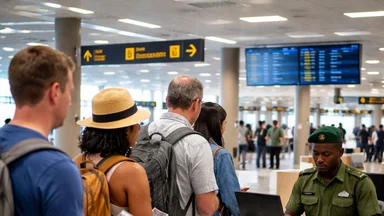
Peru grants most nationalities a 183-day stay per calendar year under the tourist visa waiver. That is a generous allowance, but the clock starts ticking the moment you pass immigration. If you overstay by even one day, the fine calculation begins. At Lima's Jorge Chávez International Airport, first-time overstays of a day or two are often overlooked by officers who simply stamp you out with a verbal warning. Repeat overstays or longer durations trigger a formal fine, but the airport process is relatively forgiving.
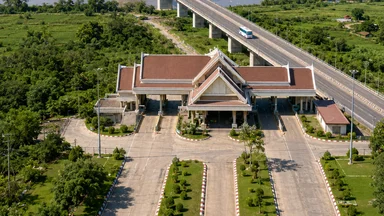
At land borders — Tumbes (Ecuador) and Desaguadero (Bolivia) are the busiest — there is no such leniency. Officers apply the fine schedule to the letter. A single day overstay at Tumbes costs roughly 0.5% of the Unidad Impositiva Tributaria (UIT) per day. As of 2026, the UIT is around 5,150 soles, so one day costs about 26 soles. That is not enormous, but the process takes time. You must pay at a Banco de la Nación counter inside or near the border post, then return to Migraciones with the receipt. The whole exercise can add an hour to your crossing.
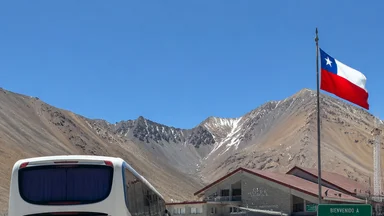
The difference stems partly from volume. Lima airport handles thousands of departures daily; officers have little appetite for paperwork on minor overstays. Land border posts see fewer travellers, and clerks have more time to enforce every rule. At Tacna, the crossing to Chile, there is no grace period at all. Overstay by one hour and you pay the full first day fine. Some travellers have reported being turned back to the nearest city with an ATM because the border post lacks a bank counter, adding half a day to the process.
The 183-day limit resets on January 1, not from your entry date. If you entered in November 2025 and stayed through January 2026, you might accidentally exceed the annual allowance. Land border clerks are particularly alert to this calendar reset. They check your entry stamps against the current year, not the rolling 12 months. A traveller who entered on December 20 and left on January 5 has used days in two calendar years, but the total per year is under 183 — still fine. But if you entered on July 1 and left on January 15, you have used 183 days in 2025 and 15 in 2026, which is legal. Confusion over this rule causes many overstay fines at land borders.
The Three Visa Categories Most Travellers Misread
Peru uses a layered entry system that confuses even frequent visitors. The most common is the Tourist Card (TAM), a paper form handed out on planes and at border crossings. It grants up to 183 days but is not a visa — it is a migration control document. Citizens of the US, Canada, the UK, Australia, and most of the EU do not need a visa for tourism, but they must fill out the TAM. Losing it is not a disaster; Migraciones can reissue it for a small fee, but land border clerks may fine you for the replacement if you cannot produce the original.
The second category is the Business Visa, which allows 90 days but is often mistaken for a tourist visa. Business visitors sometimes overstay because they assume the 183-day rule applies. It does not. Overstay on a business visa triggers the same fine schedule but with less flexibility. Extensions are not granted for business visas; you must leave and re-enter on a tourist card if you want more time. Some travellers have learned this the hard way at the Bolivia border, where clerks scrutinise visa type and deny exit until the fine is paid.
Student visas require a separate registration within 30 days of arrival. Many students enter on a tourist card, then apply for a student visa at Migraciones in Lima or Cusco. If the application is delayed beyond 30 days, the tourist card expires and the student is technically overstaying, even if the student visa is later approved. The fine for that gap is calculated from day 31 until the student visa is issued. Some language schools advise students to leave the country and re-enter to reset the tourist card, but that only works if they exit before day 30.
There is also the Andean Migration Card (TAM Andina), a lesser-known document for travel between Peru, Bolivia, Colombia, and Ecuador under the Andean Community agreement. Citizens of those countries do not need a tourist card for short visits, but other nationalities do. The loophole: if you hold a valid Andean Migration Card from a previous trip, some border officers may accept it in lieu of a new TAM, saving the 20-sol fee. However, this is inconsistently applied. At Desaguadero, clerks often insist on a new card even if the old one is still valid.
Canadians and Mexicans face an additional reciprocity fee. Canada charges Peruvians for visas, so Peru reciprocates with a fee of about $30 US for Canadian citizens entering by air. This fee is not charged at land borders, which creates an odd incentive. Some Canadians exit by land to avoid the fee, but then re-enter by air and are asked to pay. The fee is collected by a third-party contractor at Lima airport, not by Migraciones, so paying it does not affect your visa status. Overstaying the fee receipt, however, is not a migration issue.
Why Migraciones Clerks in Desaguadero Enforce Rules Differently
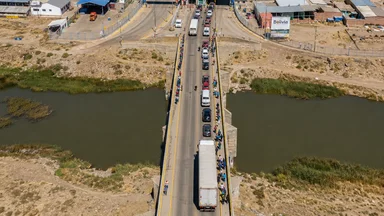
Desaguadero, on the Bolivia border, is the strictest Peruvian crossing. The post sits on a dusty strip between two towns, with a bridge over the Desaguadero River. Migraciones clerks here enforce the fine schedule without exception. They also demand proof of onward travel — a bus ticket out of Peru or a flight reservation. Many travellers arrive without this and are sent back to the nearest town with internet access to book something. There is no ATM inside the border post; the nearest one is a 10-minute walk into the Bolivian side, but Peruvian officers may not let you cross without the stamp.
Stamp errors are common at Desaguadero, especially on Sundays when staffing is thin. Clerks have been known to write the wrong date or mis-calculate the allowed stay. A traveller who entered with a 90-day stamp but received a 30-day stamp by mistake could be fined at exit. The burden is on the traveller to check the stamp before leaving the counter. Some locals carry a photocopy of the TAM instructions in Spanish to point out errors politely. It helps to know the phrase: "La fecha de ingreso está incorrecta" — the entry date is wrong.
Phone data is increasingly required for visa applications at Desaguadero. Since 2024, some nationalities must fill out an online form before presenting at the counter. The form asks for a local phone number and email. If you cannot produce a working number, the clerk may refuse entry. This rule is enforced sporadically but more often at land borders than at airports. Travellers without a Peruvian SIM card have been turned back to Puno to buy one.
The Bolivia side has its own quirks. Bolivian immigration officers sometimes stamp you out of Bolivia before you have entered Peru, creating a gap in your passport that Peruvian officers question. If you plan to cross back and forth, keep a log of dates and stamps. Desaguadero clerks have access to a shared database with Bolivia, but errors still slip through. A mismatched exit stamp can delay your crossing by hours while they verify records.
The 72-Hour Extension Trick That Backfires
Online extension of the tourist card is possible through Migraciones' virtual platform. It costs about 20 soles and extends your stay by up to 30 days, but only if you apply before your current card expires. The trick: apply exactly 72 hours before expiry, because the system takes one business day to process. Some travellers apply on a Friday for a Sunday expiry and find the extension not approved until Monday, leaving them in overstay limbo over the weekend. Land border clerks do not accept digital copies of the extension receipt; they require a printed paper. If you cannot print it, you pay the fine.
For example, a Canadian traveller named Sarah applied for an extension on a Friday evening, expecting approval by Saturday. But the system processed it on Monday, and by then she had overstayed by one day. At the Tumbes border, the clerk refused to accept her digital receipt and fined her 26 soles. She then had to walk 15 minutes to a printing shop, missing her bus to Ecuador. This case illustrates why the 72-hour trick is risky: weekends and holidays can delay processing, and land border clerks rarely show discretion.
The extension is only valid for tourist card holders. If you entered on a business visa or a visa waiver for a specific purpose, the extension is not available. Some travellers have applied anyway, paid the fee, and received a rejection notice that still charged their credit card. Refunds are not automatic; you must file a claim with Migraciones in Lima, which can take weeks.
Another backfire: if you have overstayed on a previous trip to Peru, the extension system may automatically reject your application. The database keeps a record of past overstays, and any overstay longer than 30 days triggers a flag. Even if the overstay was years ago and you paid the fine, the flag remains. Some travellers have been denied extension and told to exit the country immediately, even if their current stay is within limits.
Printing the receipt is a practical hurdle. Most internet cafes in Peru can print a PDF for about 1 sol, but near land borders they charge 5 soles and the printer may be out of ink. At Tumbes, the nearest printing shop is a 15-minute mototaxi ride from the border post. If you arrive without a printed receipt, the clerk may accept a photo on your phone, but that is at their discretion. One traveller reported being sent back to the shop to print, missing the last bus to Ecuador that day.
Common Paperwork Mistakes That Get Travellers Turned Around
The most frequent error is missing an exit stamp from a previous trip. Peru does not always stamp passports on exit, especially at busy airports. When you re-enter, the system shows your previous entry but no exit, creating an apparent overstay. Migraciones may fine you for the presumed overstay unless you can prove you left on time. Keep boarding passes or bus tickets. Some travellers now request an exit stamp explicitly, even if the officer waves them through.
Passport validity under six months is a hard rule at land borders. At airports, airlines sometimes check and deny boarding, but at Tumbes or Desaguadero, Migraciones checks the date before stamping. If your passport expires in less than six months from your intended departure from Peru, you may be refused entry. The rule applies to all nationalities, regardless of visa waiver agreements. Some travellers have been turned around with a 5-month-valid passport even though their stay was only two weeks.
The TAM form must have the correct date written in the DD/MM/YYYY format. Travellers from the US sometimes write MM/DD/YYYY, which clerks may interpret as a different date. If the form says entry on 03/04/2026, a US traveller might mean March 4, but the clerk reads April 3. The discrepancy is caught at exit, and the fine is calculated from the earlier date. Double-check the form before handing it over.
No hotel reservation printed is a common reason for refusal at land borders. Peru requires proof of accommodation for the entire stay. A booking confirmation email on your phone is often accepted at airports, but land border clerks want a paper copy. Some travellers have been sent back to find a printer. If you are camping or staying with friends, a letter of invitation with the host's DNI number and address can suffice, but it must be printed.
Overland entry without yellow fever proof is another stumbling block. Peru requires yellow fever vaccination for travellers arriving from endemic countries, which includes Bolivia and parts of Brazil. The certificate must be the yellow WHO card. Some travellers from non-endemic countries are not checked at airports but are asked for the card at Desaguadero. Without it, you may be denied entry or required to get a vaccination at a clinic in Puno, which takes a day and costs about 80 soles.
What Locals Actually Do vs. What Travel Blogs Advise
Peruvians do not carry passports for domestic travel. Their national ID (DNI) is sufficient for flights, buses, and hotels. Travellers sometimes lose their passport and assume they cannot move within Peru, but a copy of the passport plus a police report allows domestic movement. Local travel blogs often advise carrying your passport at all times, but Peruvians leave theirs at home. The practical middle ground: keep a colour photocopy of your passport's photo page and entry stamp in your day bag, and store the original in a hotel safe.
Border towns have an informal economy of taxi drivers who offer "stamp runs" — quick trips across the border and back to reset your visa. This is legal but inefficient. A driver from Tumbes to Huaquillas, Ecuador, and back costs about $20 US and takes two hours. Some blogs recommend this as a cheap way to extend your stay, but Migraciones officers are aware of the trick and may limit the new stay to 30 days instead of 183 if they suspect a visa run. Locals rarely do this; they simply pay the overstay fine if needed.
Travel blogs frequently suggest buying a fake onward ticket from websites that generate a valid-looking reservation for a few dollars. Peruvian immigration does not always check the ticket's validity, but if they do and it is fake, you can be denied entry and flagged in the system. Locals who travel abroad buy real refundable tickets or use a bus ticket from a company like Cruz del Sur, which costs about 30 soles to the border. The risk of a fake ticket is not worth the savings.
Paying the overstay fine at a Banco de la Nación is straightforward, but the bank's hours differ from Migraciones'. Banks close at 4 PM on weekdays and are closed on Sundays. If you arrive at the border post after 3 PM, you may not be able to pay until the next day, forcing you to wait overnight. Some travellers have used a "tramitador" — an informal fixer — to handle the payment for a fee of 20–30 soles. However, this is not officially sanctioned and carries risks: the fixer may overcharge, lose your money, or involve you in corruption. It is safer to plan your crossing early in the day or pay at a Migraciones office in a city before heading to the border.
Avoid crossing during Fiestas Patrias (July 28–29) and Semana Santa (Easter week). Border posts are crowded, and clerks may be less patient. Overstays during these periods are fined at the same rate, but the process takes longer. Some travellers have reported being asked for "donations" or unofficial fees during fiestas; this is rare but not unheard of. Pay only at official counters and ask for a receipt.
The Fine Schedule That Nobody Posts Online
The overstay fine is calculated as 0.5% of the UIT per day, up to a maximum of 100% of the UIT. The UIT is set annually by the Peruvian government. In 2026, the UIT is approximately 5,150 soles, so the daily fine is about 26 soles. For a 30-day overstay, the fine is roughly 780 soles. The maximum fine is 5,150 soles, regardless of how long you overstay beyond 200 days. This cap means that a very long overstay (say, a year) costs the same as a 200-day overstay.
Payment must be made at a Banco de la Nación or at Migraciones offices in major cities. At land borders, the Banco de la Nación counter may accept cash only. Credit cards are not accepted. Some travellers have been caught without enough soles and had to exchange money at poor rates. The fine is calculated in soles, not US dollars. If you pay in dollars, the exchange rate used by the bank is usually unfavourable.
There is no appeal process for overstays longer than 30 days. If you overstay by 31 days or more, you must pay the fine and exit. You cannot request a waiver or extension after the fact. Some travellers have tried to argue that they were sick or had a flight cancellation, but Migraciones does not accept these reasons. The only exception is a medical emergency with a doctor's note, which must be presented before the overstay reaches 30 days.
Despite higher fines and stricter enforcement at land borders, some travellers still choose to exit by land. The reasons vary: they may be continuing overland travel to Bolivia or Ecuador, avoiding the cost of a flight, or simply unaware of the difference. For those on a tight budget, the extra 26 soles per day may still be cheaper than a last-minute flight. However, the time cost — an extra hour at the border, potential overnight delays — often outweighs the monetary savings. If you value certainty and convenience, flying out is the safer bet. But if you are already overlanding, knowing the rules and preparing paperwork in advance can minimise surprises.