Japan Shikoku Pilgrimage Trail Shelters Fill by 4 PM in Peak October Weeks
October on the Shikoku Henro trail is a study in compressed demand. The autumn leaves draw record numbers of walkers, but the infrastructure hasn't grown to match. Shelters that sleep six to twelve people on tatami mats fill by 4 PM. Late arrivers sleep on concrete verandas or skip ahead to the next town, adding kilometers to an already long day. This is not a permit problem—no national park entry fee or reservation system governs the trail. It is a capacity problem, and it catches thousands of pilgrims every peak season.
October on the Shikoku Trail: When Shelters Fill by 4 PM
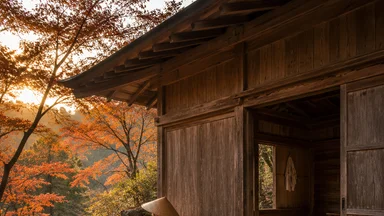
The Shikoku pilgrimage is an 1,200-kilometer circuit of 88 temples on Japan's smallest main island. Most walkers complete it in 40 to 60 days, staying at temple lodgings (shukubo), private minshuku, or the free shelters known as henro huts. In October, the huts fill early. According to trail forums and guidebook updates, occupancy hits 100 percent by 15:30 on many sections between Temple 60 and Temple 70. Shelter capacity is rarely posted online; you only know it's full when you arrive.
The huts are basic—concrete floors, a few tatami mats, sometimes a kerosene heater. No reservations are accepted; it's first-come, first-served. Walkers who arrive after 4 PM in peak weeks often find every mat taken. Some spread sleeping bags on the concrete, others walk another hour to the next town. A few give up and call a taxi, which can cost ¥5,000 to ¥10,000 for a 20-kilometer ride. The official henro map shows temple locations but not shelter capacity or condition.
Why October? The weather is mild—temperatures in the high teens Celsius—and the foliage is at its peak. Typhoon season has mostly passed, though the tail end can still bring rain. The combination of comfortable hiking and photogenic scenery creates a bottleneck. Walkers who plan for a leisurely pace with flexible accommodation are the ones who end up stranded. The regulars know to treat October like a reservation-required month, even though no system exists.
The Permit-Free Trail That Still Turns Walkers Away
Unlike many national parks in Japan, the Shikoku pilgrimage does not require an entry permit. You can start walking at any point without registering. But access is effectively blocked by capacity. Temple lodgings close their gates at 5 PM sharp. If you arrive after that, you sleep outside or find alternative arrangements. Private minshuku, which offer rooms for ¥4,000 to ¥8,000 per night, often refuse walk-ins without a prior phone call—especially in October when they are full. Some require a luggage-forwarding receipt to prove you are a serious pilgrim, not a day-tripper.
The luggage-forwarding service is popular among walkers who don't want to carry a full pack. You drop your bag at a convenience store or temple in the morning, and it arrives at your next lodging by evening. But if you haven't booked that lodging, the forwarding service won't accept your bag. In peak season, some minshuku will refuse entry to anyone who cannot show a forwarding receipt, because they assume those walkers are not committed to the full route.
Another common refusal: walkers who arrive at a temple lodging without a reservation are told the temple is full, even when rooms appear empty. Temples often hold space for groups that have booked months in advance. A solo walker showing up at 4 PM may be turned away because the temple expects a busload of 30 at 6 PM. The bus group might cancel, but the temple won't take the risk of overbooking. The walker is left to find a taxi or a distant minshuku.
Three Named Scenarios Where Planning Fails
Scenario A: Arriving at Temple 66 after 3 PM
Temple 66, Unpen-ji, sits high in the mountains of Tokushima Prefecture. The approach involves a steep climb of several hundred meters. Walkers who start late or take long breaks often arrive at the temple after 3 PM. The shukubo here has only 12 spaces. In October, those spaces are gone by 2 PM. Late arrivers must descend back to the valley—a 10-kilometer detour—to find a minshuku that may also be full. The alternative is a taxi costing around ¥8,000 to the next town, Kochi.
Scenario B: Assuming a Shelter Is Unstaffed and Open
Some henro huts are maintained by local volunteers and are unlocked year-round. But many are locked at night or during bad weather. In October 2023, a group of five walkers arrived at the hut near Temple 40 at 6 PM to find a padlock. No phone number was posted. They ended up sleeping in a bus shelter 2 kilometers back. The guidebook they used, last updated in 2019, listed the hut as "always open." Never assume a shelter is accessible without checking recent forums.
Scenario C: Relying on Smartphone Maps Offline
Google Maps works on Shikoku, but offline downloads often miss small trails and bus stops. In October 2022, a walker near Temple 23 followed an offline map that showed a 2-kilometer shortcut. The trail had been closed by a landslide months earlier, but the offline map didn't reflect it. He ended up on a 12-kilometer road walk in the dark. Local bus schedules change on October 1 without notice; the offline map still showed the summer timetable. He waited 90 minutes for a bus that never came.
Off-Season vs. Peak: A Cost-and-Crowd Comparison
The difference between October and the off-season is stark. From November to March, shelters are rarely more than half full by 5 PM. Temperatures drop to single digits Celsius at night, but the huts are heated and the crowds are thin. Off-season lodging at temple shukubo runs ¥4,000 to ¥6,000 per night, including breakfast and dinner. In October, the same room costs ¥8,000 to ¥12,000—if you can get one. Many temples charge peak-season surcharges of 20 to 50 percent.
Crowd density also affects pace. In October, you queue for water taps, wait for toilets, and share narrow mountain paths with dozens of other walkers. The trail can feel like a busy urban sidewalk. In winter, you might walk for hours without seeing anyone. The trade-off is weather: winter brings snow at higher elevations, and some mountain passes close temporarily. But the solitude and lower cost are worth it for many repeat pilgrims.
Some walkers split the difference, starting in late September or early November. Late September still has warm weather but fewer walkers. Early November has good foliage and lower prices, though daylight hours shrink. The sweet spot, according to forum posts, is the first two weeks of November, when the crowds thin but the leaves are still colorful. Shelter occupancy drops to 60–70 percent by 4 PM, leaving room for late arrivers.
What the Henro Maps Don't Tell You
The official henro map, available at temples and tourist offices, shows temple locations and approximate distances. It does not show shelter capacity, condition, or whether a hut is locked. The map has not been updated since 2019, according to a note on the Shikoku Tourism website. Some shelters listed as "available" have been closed for years. Others have been renovated and now require a key from a nearby temple, but the map doesn't note that.
Water taps are another blind spot. After typhoon season, some taps run dry or are contaminated. The map marks water sources but not their reliability. In October 2021, a walker near Temple 44 found the tap dry and had to hike 4 kilometers to a convenience store. The map also omits seasonal bus schedules. Local buses change on October 1, and the new timetable is often not posted online until the day before. Walkers relying on the summer schedule miss the last bus.
Trail condition updates are scarce. Landslides, road closures, and temple renovations happen regularly, but the official map doesn't show them. The best source is the English-language forum on Shikoku Trail Net, where walkers post recent conditions. But that requires data connectivity, which is patchy in mountain sections. Regulars download the forum threads before leaving and carry a printed backup.
Workarounds That Regulars Use
Experienced henro have developed a set of strategies to avoid the 4 PM crunch. First, they call minshuku 48 hours ahead, in Japanese. Even a few phrases—"Sumimasen, heya wa arimasu ka?"—can secure a room when walk-ins are turned away. Some use the concierge service at their previous lodging to make the call. Second, they carry a bivvy sack rated to 5°C. If all shelters are full, they sleep in a bus stop or under a pavilion, protected from rain and wind. It's not comfortable, but it avoids a costly taxi.
Third, they book a taxi to the next town by 2 PM cutoff. Taxis in rural Shikoku are scarce after dark, and drivers often stop taking calls by 5 PM. Calling before 2 PM guarantees a ride if needed. Fourth, they join a henro group that reserves shared lodging in advance. Groups of 6 to 10 can book entire temple lodgings, splitting the cost and ensuring a bed. Solo walkers can find groups through the Shikoku Trail Net forum or at the start temple in Tokushima.
Another workaround: walk the trail in reverse. Most pilgrims go clockwise from Temple 1. Going counter-clockwise means you meet the crowds coming the other way, but you also hit less-crowded sections. The reverse route has fewer walkers overall, and shelters fill later. Some regulars recommend it for October, though it means climbing the steepest sections in the opposite direction. A final tip: carry a paper copy of the bus schedule for the current month, obtained from the local tourist office. Relying on smartphone data is risky in the mountains.
Additional Pitfalls: Weather, Language, and Timing
Beyond shelter capacity, October walkers face several lesser-known challenges. Typhoon remnants can cause sudden downpours, turning trails into mudslides. In October 2021, a storm dumped 200 millimeters of rain in 24 hours, forcing trail closures between Temple 12 and Temple 15. Walkers who hadn't checked the forecast were stranded in low-lying areas. The Japan Meteorological Agency issues warnings in Japanese only; English translations are often delayed by hours. Regulars bookmark the JMA's English page and check it twice daily.
Language barriers compound the problem. Many temple priests and minshuku owners speak little English. A phone call in Japanese is essential, but even basic phrases can be misunderstood. For example, asking for "one person, one night" might be interpreted as a request for a private room when only dormitory-style accommodation is available. Miscommunication can lead to being turned away upon arrival. Some walkers carry a printed card with their request in Japanese, including dates and number of people.
Timing within the month matters. The first week of October is relatively quiet, as many Japanese tourists are still at work. The second week sees a surge during the October 14 national holiday (Sports Day). The third and fourth weeks are the busiest, with weekend crowds swelling shelters. Walkers who can shift their start to late September or early November avoid the worst of it. Those committed to October should aim to start on a Monday, not a Friday, to avoid weekend accumulations.
Counter-Argument: Is the 4 PM Fill Really That Common?
Not all sections of the trail suffer equally. The southern part of the circuit, from Temple 24 to Temple 39 in Kochi Prefecture, has more lodging options—both minshuku and small hotels—so shelters there rarely fill before 5 PM. The problem is concentrated in the mountainous sections of Tokushima and Ehime, where settlements are sparse. A walker who plans a route that avoids these bottlenecks can often find space even in October. For example, staying in towns like Awa-Ikeda or Matsuyama, which have multiple accommodations, reduces reliance on huts.
Some argue that the 4 PM fill is exaggerated by forum posts that focus on negative experiences. In a survey of 50 walkers on the Shikoku Trail Net forum in 2023, only 12 reported being unable to find shelter by 4 PM. The rest either arrived earlier or had pre-booked. The key variable is start time: those who begin walking by 6 AM typically reach their destination by 2 PM. The late arrivers are often those who start at 9 AM or take long lunch breaks. Discipline in the morning is the single biggest factor in securing a bed.
Furthermore, some temples allow pilgrims to sleep in the meditation hall (hondo) if the shukubo is full. This is not advertised, but asking politely—in Japanese—can yield a spot on the floor. A few temples even have overflow rooms that are unlocked only upon request. Walkers who arrive after 4 PM should still ask at the temple office, not just assume they are out of luck. One regular reported being given a futon in the priest's private quarters after all official spaces were taken.
Long-Term Trends: Trail Improvements and Capacity Creep
The Shikoku pilgrimage has seen a steady increase in foreign walkers over the past decade. In 2019, an estimated 15,000 foreign pilgrims completed the circuit, up from 8,000 in 2015. Post-pandemic numbers are rebounding, with 2023 estimates around 12,000. This growth has not been matched by new shelter construction. A few new henro huts have been built by local municipalities, but they are small—typically adding 4 to 6 beds each. The net increase in capacity is less than 5 percent per year, while demand grows by roughly 10 percent annually.
Some temples have responded by raising prices, effectively reducing demand. For example, Temple 58 (Senju-ji) now charges ¥10,000 per night in October, up from ¥6,000 in 2015. This prices out budget walkers, who then crowd the free huts. The result is that the hut problem worsens even as temple lodgings become less affordable. A few private entrepreneurs have opened guesthouses near popular temples, but they are often booked months in advance.
The Shikoku Tourism Board has discussed implementing a reservation system for huts, but no concrete plans exist. The cultural norm of first-come, first-served is deeply ingrained, and any change would require consensus among 88 temples. In the meantime, the onus remains on the walker to plan ahead, carry backup gear, and accept that October is a month of compromises.
For more on managing logistics in high-demand travel situations, see our guide on Algarve guesthouse math and the pitfalls of Thailand visa exemptions.