Georgia Tbilisi Hostel Bunk Math Loses to Guesthouse Rooms by Three Nights
The numbers in Tbilisi look simple at first. A hostel dorm bunk runs roughly $12 to $18 a night. A private room in a guesthouse starts around $25 to $35. The difference—about $10 to $20—seems to favor the hostel. But the arithmetic flips somewhere around the third night. After that, the guesthouse not only becomes cheaper per night of real comfort, but also unlocks savings on food, laundry, and transport that the hostel math ignores.
This is not a story about luxury. It is about how a traveler on a typical budget—say $40 to $60 a day—can stretch that money further by choosing the right lodging for the right length of stay. The answer changes depending on whether you are in town for a weekend or a week. And the neighborhoods of Tbilisi, with their steep hills and Soviet-era apartment blocks, reward those who know where to look.
The Arithmetic That Flips the Budget
The obvious comparison is nightly rate. But the true cost of a hostel bunk includes things that do not show up on the booking page. Shared bathrooms mean waiting in line during morning rush. Dorm noise—from snoring to late-night arrivals—costs sleep, and lost sleep often leads to a cafe breakfast instead of the free hostel toast and jam. A private guesthouse room, even with a shared bathroom in the hallway, offers a quieter base and the option to cook.
Cooking is where the real saving appears. A meal at a mid-range Tbilisi restaurant runs roughly $8 to $15. A simple dinner from the local market—fresh tomatoes, cheese, bread, maybe some Georgian walnut candy—costs about $2 to $4. Over three nights, that difference alone can reach $30 to $40, more than covering the guesthouse price gap. Hostels usually have a kitchen, but it is shared, often cramped, and the fridge space is limited. Guesthouse kitchens, even small ones, give you a full counter and a stove that is not in constant use.
Then there is the laundry factor. Hostel washing machines, if they exist, charge roughly $3 to $5 per load. Guesthouses with in-room or shared machines often include it in the rate or charge a token amount. Over a week, that saving adds up to the price of a night's stay. The same logic applies to drinking water: guesthouse hosts often let you refill from their filter or tap, while hostel guests buy plastic bottles at roughly $0.30 each, a small cost that compounds.
The three-night threshold is not arbitrary. It is the point at which the nightly saving from cooking, laundry, and quiet sleep equals the extra upfront cost of the guesthouse room. For stays shorter than three nights, the hostel's lower headline price and central location usually win. For longer stays, the guesthouse becomes the better bet on pure arithmetic.
Why Hostels Get Built for Short Stays
Most Tbilisi hostels are designed for backpackers on two- or three-day hops. The layout maximizes bed count per square meter. Common areas are small, with a couple of couches and a TV, encouraging quick socializing rather than remote work. Lockers are sized for a daypack, not a full suitcase. Checkout times are often 10 or 11 a.m., forcing an early start or a lobby wait.
This model works well for the traveler passing through on the Caucasus route—Baku to Tbilisi to Yerevan—where a night or two in each city is the norm. But the same features become liabilities for someone staying a week. The lack of a proper desk or quiet corner makes it hard to plan the next leg or catch up on emails. The constant turnover of roommates means repacking your gear every morning to keep it secure.
Hostel staff in Tbilisi are generally helpful, but they are not neighborhood guides. They hand you a map, point out the main sights, and sell you a tour to Kazbegi or Kakheti at a markup. The tour markup is not trivial: a group tour to Gudauri or Stepantsminda might cost $35 to $50 from a hostel desk, while the same trip by marshrutka costs $10 to $15 one way. The hostel convenience fee is real, and it adds to the nightly cost.
Noise is another hidden cost. Hostels in central Tbilisi—around Rustaveli Avenue or the Old Town—sit above bars and restaurants that run late. Earplugs help, but they do not block the bass. Guesthouses in residential neighborhoods like Vera or Vake are quiet by 10 p.m. For light sleepers, that difference alone is worth the upgrade.
What a Guesthouse Room Buys Beyond Space
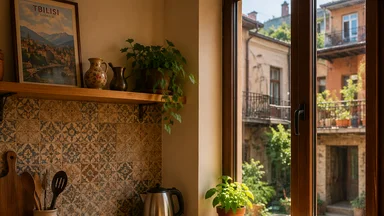
A private room in a Tbilisi guesthouse typically includes a double or twin bed, a wardrobe, a desk, and often a balcony. The bathroom may be ensuite or shared with one other room. The key addition is the kitchenette. Even a basic one with a two-burner stove, a small fridge, and a kettle turns the city's fresh produce markets into a cost-saving tool.
The Dezerter Bazaar, near the central station, sells walnuts, dried fruits, spices, and cheese at roughly half the price of tourist-area shops. The Saburtalo neighborhood's markets are similar. Cooking dinner for two costs about $4 to $6. The same meal at a restaurant near the Freedom Monument would be $15 to $25. Over a week, that saving covers the entire lodging cost difference between hostel and guesthouse.
Washing machine access is another practical benefit. Guesthouse hosts often let you use the machine for free or for a small fee. Coin laundries in Tbilisi charge roughly $3 to $5 per load and are not always close to hostels. For a week-long stay, doing two loads of laundry at the guesthouse saves $6 to $10 and an hour of walking or waiting.
The host living next door is an underrated resource. Many guesthouse owners have lived in the same apartment for decades and can offer practical advice: which marshrutka number goes to the open-air market, which bakery has fresh bread at 7 a.m., and which pharmacy sells the generic version of a medicine. This local knowledge saves time and money, and it is not something a hostel receptionist can replicate.
The Neighborhood Trade-Off You Can't Ignore
Tbilisi's neighborhoods vary more in price and character than most guidebooks admit. Rustaveli Avenue, the main drag, is where many hostels cluster. The location is central—walking distance to the Opera, the Parliament, and the Rustaveli metro station. But the restaurants and cafes along this strip cater to tourists and business travelers, with prices roughly 20 to 30 percent higher than similar places a few blocks away.
Sololaki, the hillside neighborhood below the Narikala fortress, offers guesthouses with balconies and views of the Mtkvari River. The streets are steep and sometimes unpaved, but the atmosphere is old Tbilisi. Rooms here run roughly $25 to $35 a night. The trade-off is the climb: a 10-minute uphill walk from the nearest bus stop can feel longer with groceries. Travelers with mobility issues should look elsewhere.
Marjanishvili, north of the river, has a metro station of the same name and a mix of Soviet-era apartments and new buildings. Guesthouse rooms here often start near $20 to $28 a night, undercutting Sololaki by a noticeable margin. The neighborhood has a large indoor market, a few good bakeries, and easy metro access to the center (about 10 minutes). The area feels less curated than the Old Town, but that is part of the appeal for longer stays.
Saburtalo, further west, is a residential district with wide boulevards, supermarkets, and a campus feel. Guesthouse rooms here can be found for $18 to $25 a night, especially if you book directly. The trade-off is distance: a 15-minute metro ride to the center, plus walking time at both ends. But for a week-long stay, the lower room rate and proximity to supermarkets (where prices are lower than central convenience stores) often make Saburtalo the cheapest option overall.
Short-Lets Upset the Whole Comparison
Online platforms list private studios and apartments in Tbilisi starting near $30 to $45 a night. Weekly discounts sometimes bring those rates down to $25 to $30 a night, undercutting guesthouse prices for stays of five nights or more. The appeal is clear: a whole apartment with a full kitchen, washing machine, and no shared walls.
But short-lets come with their own costs. Cleaning fees, typically $15 to $30 per booking, can erase the weekly saving for a solo traveler or a couple. Minimum stays of three to five nights lock out weekend trippers. Self-check-in means no host to ask for recommendations, and no one to help if the hot water stops working. Many short-let apartments are in new buildings with thin walls and noisy neighbors, a problem that guesthouse hosts usually screen out.
The booking platform also takes a cut, typically 10 to 15 percent, which is baked into the price. Direct booking with a guesthouse—by phone or email—often knocks 10 to 20 percent off the platform rate. Short-let hosts rarely offer that discount because they rely on the platform for trust and payment processing.
For a single traveler or a couple staying a week or more, a short-let apartment can beat a guesthouse on space and privacy. But the trade-off in local knowledge and flexibility is real. A guesthouse host who lives next door can hold your key while you hike in the Caucasus for two days. A short-let host, often managing properties remotely, cannot.
The Real Cost of Convenience Is Time
Every lodging choice trades money for time, or time for money. Hostels sell convenience: a central location, a ready-made social scene, and a front desk that books tours and taxis. But that convenience comes at a premium. The tour markup, the overpriced breakfast, the coin laundry—all of these eat into the budget in ways that are easy to ignore until you add them up.
Guesthouses trade a bit of convenience for savings. You walk 10 minutes to the cheaper market instead of buying from the corner store. You figure out the marshrutka route instead of taking a taxi. You cook dinner instead of eating out. These are not hardships; they are the small routines of local life. For travelers who enjoy that kind of independence, the guesthouse model is a better fit.
Short-let apartments offer the most independence but the least support. You are on your own for everything: finding the supermarket, figuring out the trash collection schedule, dealing with a broken boiler. The time cost of troubleshooting can be significant, especially for first-time visitors to Tbilisi. A guesthouse host who speaks English and Russian can solve these problems in minutes.
The hidden cost of convenience is also about opportunity cost. An hour spent waiting for a hostel laundry cycle is an hour not spent exploring the Dry Bridge flea market or hiking to the Mtatsminda Park. A traveler on a short trip may not mind that trade. A traveler on a longer stay will feel it more acutely.
Picking the Right Bet for Your Length of Stay
For one or two nights, a hostel bunk near Rustaveli or the Old Town is the logical choice. The location saves time, the social atmosphere can be enjoyable, and the higher per-night cost is offset by not needing to cook or do laundry. The key is to pick a hostel with good reviews for noise and cleanliness, and to book a bed in a smaller dorm (four to six beds) for a better sleep.
For three to five nights, a guesthouse private room in Marjanishvili or Vera offers the best value. The nightly rate is higher than a hostel bunk, but the savings on food, laundry, and quiet sleep more than compensate. Look for a guesthouse with a kitchenette and a washing machine, and book directly if possible to get a lower rate. The host's local advice is a bonus that can save you money on transport and tours.
For a week or more, a short-let apartment in Saburtalo or a guesthouse with a full kitchen in the same area is the clear call. The weekly discount on short-lets often brings the rate below $25 a night, and the ability to cook every meal and do laundry at home keeps daily spending low. The trade-off is distance from the center, but the metro makes it manageable. For solo travelers, a guesthouse may still be preferable for the human connection and troubleshooting support.
A mix-and-match approach also works: book a hostel for the first night to get oriented and meet people, then move to a guesthouse for the bulk of the stay. This avoids the problem of committing to a neighborhood before you have seen it. Many guesthouses offer flexible check-in and will hold your luggage if you arrive early. The key is to plan ahead, especially during the peak months of May through October, when the best-value rooms get booked first.
Lock in weekly rates by contacting the host directly through the booking platform's messaging system or by phone. Most guesthouse owners are happy to negotiate a lower rate for a longer stay, especially if you are traveling outside the peak season. The same applies to short-let apartments: a direct booking often saves the platform fee, which can be 10 to 15 percent. For a week-long stay, that saving alone is worth the effort of a phone call.
The bottom line is that Tbilisi's lodging market rewards flexibility and a willingness to do a little math. The cheapest option on paper is not always the cheapest in practice. And the best option for a weekend is not the best for a week. By matching the lodging type to the length of stay, a traveler can stretch a budget further and experience the city more like a local.