Algarve Guesthouse Math Favors Outlying Stops Over Lagos Hostel Rows
Lagos, on Portugal's southwestern coast, has long been the Algarve's backpacker hub. Its old town, a warren of cobbled lanes and whitewashed buildings, is crammed with hostels that pack bunk beds into former fish warehouses. In high season, a dorm bed runs €15–25, which sounds cheap until you factor in the noise from bars that blast music until 3am, the queues for the communal kitchen, and the lockers that barely hold a daypack. The experience can feel less like a holiday and more like a endurance test.
But the Algarve is bigger than Lagos. A roughly one-hour train ride east brings you to Tavira, a riverfront town that has largely avoided the stag-party scene. Here, guesthouse doubles start at €40–60 per night, often with breakfast included. The trade-off is clear: pay roughly the same as a Lagos dorm bed for a private room with a proper bed, a quiet street, and a morning spread of bread, cheese, and coffee. Here is the math behind that choice and others like it—surf hostels in Sagres, short-lets outside Albufeira—and what a humane 7-day itinerary might look like when you stop treating the Algarve as a checklist.
The Hostel Row on Rua de São João
Rua de São João, in Lagos' old town, is ground zero for budget accommodation. A dozen hostels line the street, most converted from 19th-century sardine warehouses. The ceilings are high, the walls are thick, but the rooms are packed. A typical dorm has six to twelve bunks, and in July and August, every one is filled. The common areas—often a narrow lounge and a cramped kitchen—can feel like a transit terminal at rush hour.
The price, €15–25 for a dorm bed in high season, is not as cheap as it once was. Hostels in Lagos have crept up, in part because demand from the nearby beach cliffs and the Ponta da Piedade grottoes shows no sign of slowing. Meanwhile, the quality has not kept pace. Lockers are often small and poorly maintained; some hostels charge extra for linen or a locker padlock. The noise is relentless: bars on the street below, and sometimes inside the hostel itself, keep going until the early hours.
There are exceptions. A few hostels on the quieter side streets, like Rua da Laranjeira, offer better soundproofing and smaller dorms. But the general pattern holds: you are paying for location and a bed, not for rest. The hostel model in Lagos works best for travelers who plan to party every night and sleep it off on a beach during the day. For anyone wanting a decent night's sleep, the math starts to look shaky.
Some backpackers I spoke with in a Tavira guesthouse last summer had started their trip in Lagos. “We lasted two nights,” said a German couple in their late twenties. “The dorm was €22 each, and we barely slept. Here we pay €55 for a double with breakfast, and it’s silent at night.” That kind of trade-off is the core of the Algarve guesthouse math.
Why Tavira’s Guesthouses Beat the Lagos Scramble
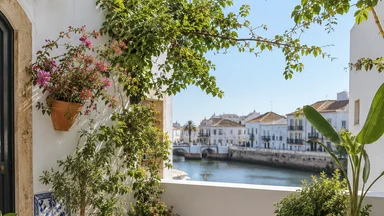
Tavira sits on the banks of the Rio Gilão, about 30 kilometers east of Faro. Its old town is smaller than Lagos, but it has a calm that Lagos lost years ago. Guesthouses here are typically owner-run, converted from townhouses with tiled courtyards and rooftop terraces. A double room in high season runs €40–60, and almost always includes breakfast—a simple spread of bread, butter, jam, cheese, ham, and coffee, served in a sunny breakfast room or on a shaded patio. The difference from Lagos is not just in price. The guesthouse owners in Tavira tend to live on-site or nearby, and they care about the property in a way that investor-run hostels often do not. Rooms are cleaned daily, towels are changed, and the owners can give you genuine local advice—which beach has the calmest water today, which restaurant serves the best cataplana. That personal touch is hard to find in a 100-bed hostel.
Tavira also has a train station a five-minute walk from the old town. The Algarve line runs west to Lagos and east to the Spanish border at Vila Real de Santo António. Trains are frequent, roughly every hour, and a ticket to Lagos costs around €5–7 each way. That means you can use Tavira as a base and day-trip to Lagos for the grottoes, or to Faro for the Ria Formosa, without paying Lagos prices. The savings on lodging alone can cover the train fare and leave money for a good meal.
The trade-off is that Tavira lacks the nightlife of Lagos. If you want clubs and late bars, Tavira will feel quiet. But for travelers who value sleep, good food, and a slower pace, the guesthouse math is compelling. As of late 2024, some estimates put the average Tavira guesthouse double at €50 per night, compared to €75 for a comparable private room in Lagos. Over a week, that difference adds up to €175—enough for several nice dinners or a day trip to the Ria Formosa.
The Transit Calculus: Train Time vs. Lodging Savings
The Algarve train line, operated by Comboios de Portugal, runs along the coast from Lagos to Vila Real de Santo António, with stops in Portimão, Silves, Faro, Tavira, and others. The trains are clean, air-conditioned, and generally on time. A regional train from Lagos to Tavira takes roughly one hour and costs around €5–7. That is a short commute for a significant lodging saving.
Consider a week-long stay. In Lagos, a private room in a mid-range guesthouse or hotel runs €70–100 per night in high season. In Tavira, a comparable room costs €40–60. The difference of €30 per night, over seven nights, is €210. Subtract the cost of two round-trip train tickets to Lagos for day trips—say, €14 total—and you are still ahead by nearly €200. And that does not account for the cheaper meals you can cook in a guesthouse with a kitchenette, or the free beach shuttle that runs in Tavira during summer.
For travelers without a car, the train is a lifeline. The Algarve line connects most of the major towns, and stations are typically within walking distance of the old quarters. In Tavira, the station is a five-minute walk from the main square. In Lagos, it is a ten-minute walk from the old town. A rental car would cost roughly €40 per day in high season, plus fuel and parking. By using the train, you can skip that expense entirely.
The catch is that trains do not run late into the night. The last train from Lagos to Tavira departs around 9pm, which means you need to plan your day trips accordingly. If you want to stay in Lagos for dinner and drinks, you will need to take a later bus or a taxi, which adds cost. But for most travelers, the train schedule works fine: arrive by mid-morning, explore, and head back by early evening.
Costa Vicentina’s Surf Hostels Offer Another Math
West of Lagos, the Costa Vicentina is a stretch of wild coastline with some of Europe's best surf breaks. Towns like Sagres and Carrapateira are small, with a handful of surf hostels that cater to a young, active crowd. A dorm bed in a surf hostel runs €18–25 per night, similar to Lagos, but it often includes a surf lesson and gear rental. That is a good deal if you plan to surf every day.
But the remote location changes the math. Buses from Lagos to Sagres run only three or four times a day, and the journey takes about 45 minutes. Once you are in Sagres, there is not much to do besides surf, hike the cliffs, and eat at a few restaurants. The hostels themselves are basic: shared bathrooms, minimal common areas, and a no-frills vibe. For a week of surfing, it works. For a mixed itinerary that includes sightseeing, it feels limiting.
Nearby, there are guesthouses that offer lodging only, without the surf package. These run €30–50 for a double, and you can rent a board separately for about €15–20 per day. That math can work better if you are traveling as a couple or want more privacy. The trade-off is that you lose the social scene of the surf hostel, which for solo travelers is part of the appeal.
Based on rates I collected from a half-dozen surf hostels in Sagres and Carrapateira in July 2024, a week in a surf hostel, including dorm bed and daily surf lessons, runs about €180–250 per person. A week in a Carrapateira guesthouse, with a private room and board rental, might run €250–350 per couple. Which is better depends on whether you value community or privacy. The key is to know the numbers before you book.
Mid-Range Short-Lets: The Olive Grove Trade-Off
Short-let apartments, booked through platforms like Airbnb or Vrbo, are another option for travelers who want more space and a kitchen. In the Algarve, a one-bedroom apartment outside Albufeira or near Loulé runs €70–100 per night in peak season. That includes a private bedroom, a living area, a kitchen, and often a pool or garden. For a couple, that can be cheaper than two hostel beds and a restaurant dinner every night.
The trade-off is location. These apartments are rarely within walking distance of the old town or the beach. You need a car or a willingness to take taxis. The ones near Albufeira, for example, are often in sprawling resort complexes with their own pools and bars, but the town center is a 20-minute walk or a short drive. If you want to explore the nightlife, you will need to budget for transport.
Minimum stays are common: three to five nights in high season. That locks you into a single base, which can be fine if you plan to relax by the pool, but restrictive if you want to move around. The cleaning fees, typically €40–60 per booking, add to the cost. Over a week, a short-let might run €490–700, compared to €280–420 for a Tavira guesthouse. The short-let gives you more space and privacy, but the guesthouse gives you a better location and breakfast.
The olive grove trade-off, as I call it, is about what you value. If you want to cook your own meals, do laundry, and spread out your belongings, a short-let makes sense. If you want to step out your door into a historic town and have someone make your breakfast, a guesthouse is better. Neither is universally right; the math depends on your priorities.
A 7-Day Humane Pace: Tavira Base, Day Trips Out
Here is a realistic 7-day itinerary using Tavira as a base, designed for a humane pace—no 6am starts, no three-town days. It assumes you arrive in Tavira on Day 1 and leave on Day 7.
Days 1–2: Explore Tavira old town and its islands. Spend the first day wandering the cobbled streets, crossing the Roman bridge, and visiting the Castelo de Tavira for views over the rooftops. On Day 2, take the ferry to Ilha de Tavira, a barrier island with a long, sandy beach. The ferry runs every 30 minutes in summer and costs about €2 each way. Pack a picnic; the island has only a few kiosks.
Day 3: Train to Faro for the Ria Formosa. The train from Tavira to Faro takes about 30 minutes. Spend the day exploring Faro's old town, then take a boat tour of the Ria Formosa natural park. Several operators offer 2-hour trips for around €20–25. Return to Tavira by early evening.
Day 4: Bus to Cacela Velha and a beach walk. Cacela Velha is a tiny hilltop village with a church, a few houses, and a stunning view over the lagoon. A bus from Tavira takes about 20 minutes. Walk down to the beach and follow the coastal path east for an hour. Bring water and sunscreen; there is no shade.
Day 5: Return to Lagos for Ponta da Piedade. Take the early train to Lagos (around €6). Walk to Ponta da Piedade, the famous sea-cliff formation with grottoes and arches. A kayak tour costs about €25–35 and lasts two hours. Have lunch in Lagos old town, then take the mid-afternoon train back to Tavira.
Days 6–7: Rest day and local market. On Day 6, do nothing. Read a book on the rooftop terrace. Eat pastéis de nata from the local bakery. On Day 7, visit the Tavira market on the riverside for fresh produce and local crafts. Pack and head to the station for your onward journey.
This itinerary gives you a mix of beach, nature, and culture without the rush. The total cost for lodging (7 nights at €50 average) is €350. Trains and buses add roughly €30. Meals, if you cook some and eat out others, run about €200–300. Total: around €580–650 per person for the week, not including flights. Compare that to a Lagos-based trip with a private room at €75/night and a rental car: lodging €525, car rental €280, fuel €50, total €855. The savings of roughly €200–250 are real.
The Numbers That Favor the Outlier Stops
The Algarve's lodging market is segmented. Lagos captures the backpacker crowd and charges a premium for its brand-name cliffs and nightlife. Tavira offers guesthouse doubles at an average of €50 per night, compared to €75 for a comparable private room in Lagos. Surf hostels in Sagres and Carrapateira run €18–25 for a dorm bed, but the total weekly cost, including surf lessons, is about €180–250. Short-lets outside Albufeira run €70–100 per night, with a weekly total of €490–700.
The outlier stops—Tavira, Sagres, Carrapateira—are not for everyone. They require a willingness to trade nightlife for quiet, to use public transit, and to plan day trips rather than walk out your door to a beach. But for travelers who value sleep, good food, and a slower pace, the math is clear. The savings on lodging alone can cover the cost of a few nice meals or a day trip to the Ria Formosa.
There is a reason the Algarve's inland and eastern towns remain cheaper: they are less famous. Lagos has the grottoes, the cliffs, the Instagram spots. Tavira has a river, a Roman bridge, and a ferry to an undeveloped island. The trade-off is real, and reasonable people will disagree on which is better. But the numbers do not lie. If you are on a budget and want a humane pace, the outlier stops win.
For another example of how timing and location affect budget travel in Portugal, see our article on Lisbon market timing, where morning visits to the Mercado da Ribeira save money compared to evening meals. A similar pattern holds in Spain: our piece on Valencia Fallas budget math shows how early arrival and hostels beat mid-festival bookings. Across southern Europe, the most famous spots charge a premium, and the math often favors the second-tier town.