Kenya E-Visa Nationality Tiers Trigger Airport Desk Refusals
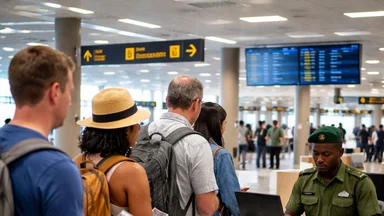
In late 2024, a passenger from Brazil arrived at Jomo Kenyatta International Airport in Nairobi, expecting to get a visa on arrival. Instead, an immigration officer pointed to a screen showing that his nationality required a pre-approved e-visa. He was denied boarding and had to rebook his flight. According to Kenya Airways data shared with travel agents, boarding denials for passengers without proper visas increased by roughly 40% in 2024 compared to the previous year, with Tier 3 nationalities accounting for most cases.
Kenya's Three-Tier E-Visa System Creates Confusion at Jomo Kenyatta
Kenya's e-visa system divides nationalities into three tiers. Tier 1 includes passport holders from select African countries who can enter visa-free. These are mostly fellow East African Community members plus a few others like Ghana and South Africa, though the list changes periodically. Tier 2 covers nationalities eligible for an e-visa on arrival—meaning they can apply online or at the airport but must have approval before passing through immigration. Tier 3 requires a mandatory pre-approved e-visa before travel; no visa on arrival is possible.
The tier classification is not always intuitive. For instance, citizens of some Caribbean nations fall into Tier 3, while many European countries are Tier 2. The official e-visa portal lists the categories, but it's not always up to date. Travelers who assume their nationality qualifies for visa on arrival sometimes discover the hard way that it doesn't. Airport desk refusals have spiked as a result, particularly for passengers from Tier 3 countries who arrive without prior approval.
Kenya Airways, the national carrier, has also reported an increase in boarding denials at departure airports. Airline staff are supposed to verify visa requirements before issuing a boarding pass, but the tier system can be confusing for check-in agents too. Some passengers have been allowed to board only to be denied entry in Nairobi, then sent back on the next flight at their own expense. The airline has since updated its training materials to emphasize tier checks.
The confusion is compounded by the fact that Kenya's e-visa system is relatively new. It was introduced in 2015 but has undergone several revisions, including the tier structure. The government's goal was to streamline entry and boost tourism, but the complexity has created a new set of problems. Immigration officials at Jomo Kenyatta say they see at least a handful of refused passengers every day, many of whom simply chose the wrong visa type or applied too late.
How the E-Visa Categories Actually Work on the Ground
The official Kenya e-visa portal is the starting point. It lists all countries and their tier status. For Tier 2 and Tier 3 nationalities, the application process is similar: fill out an online form, upload a passport photo and passport data page, pay a fee, and wait for approval. The single-entry visa costs roughly US$30–50, depending on processing speed. A transit visa, valid for 72 hours, is available for around US$20, but it only allows you to stay in the airport transit area—not leave the terminal.
There is also the East African Tourist Visa, which covers Kenya, Rwanda, and Uganda. This visa costs about US$100 and allows multiple entries into the three countries within 90 days. It's a good deal for travelers planning a regional trip, but not everyone qualifies. The visa must be obtained from the first country of entry, and each country's immigration system has different rules about how it's issued. Some travelers have reported delays because Kenyan immigration officials were not familiar with the joint visa.
For business travelers, a multiple-entry e-visa is available. It costs around US$100–150 and is valid for up to one year. However, approval is not guaranteed, and applicants may need to provide an invitation letter from a Kenyan company. Frequent flyers often opt for this to avoid repeated applications, but the process can take several weeks. The multiple-entry visa is also subject to the same tier restrictions: Tier 3 nationals still need pre-approval before each trip.
One quirk of the system is that the e-visa is tied to the passport number. If you renew your passport, the visa becomes invalid. Travelers have been refused entry because they presented a new passport with an old visa attached. The e-visa approval letter is sent by email and should be printed and carried with you. Immigration officers at the airport often ask to see it before you reach the counter, and airline staff may also request it at check-in.
Common Paperwork Mistakes That Lead to Refusals
The most frequent mistake is selecting the wrong visa type. The online application form asks for your purpose of travel—tourism, business, transit, etc.—and each category has different requirements. Some travelers on a short layover have applied for a tourist visa instead of a transit visa, only to have their application rejected or delayed. The transit visa is cheaper and faster, but it does not allow you to leave the airport. If you plan to enter the country, you need a different visa.
Missing supporting documents is a frequent reason for refusal. The e-visa application requires proof of return or onward travel, proof of accommodation, and proof of sufficient funds. For tourism, a hotel booking confirmation is usually enough. For business, an invitation letter from a Kenyan company is necessary. Travelers who submit incomplete applications may get an e-visa approved but still face questioning at the airport. Immigration officers can request to see the supporting documents again, and if you don't have them, you may be refused.
Photograph dimensions are a surprisingly common snag. The e-visa portal requires a passport-style photo with specific dimensions (roughly 2x2 inches, white background). Many applicants upload photos that are too small, too large, or have the wrong background color. The system may accept the photo, but immigration officers sometimes compare it to your appearance and flag discrepancies. It's best to use a professional photo taken within the last six months. Also, avoid wearing glasses or headwear unless for religious reasons.
Timing is critical. The e-visa application should be submitted at least one week before travel, but some travelers apply 48 hours before departure. While processing can be as fast as 24 hours, it can also take several days. Applications submitted on a Friday may not be processed until Monday, causing last-minute stress. The system does not offer expedited processing for all nationalities. If you arrive at the airport without an approved e-visa and your nationality is Tier 3, you will not be allowed to board.
Passport validity and blank pages are also important, but these requirements are standard across many countries. Kenya requires that your passport be valid for at least six months beyond your intended departure date, and you need at least two consecutive blank pages for entry stamps. Many travelers are unaware of this rule and show up with a passport that expires in three or four months, or with too few blank pages. Immigration officers will deny entry even if you have a valid e-visa.
What Locals and Frequent Flyers Do Differently
Kenyan citizens, of course, use their national ID cards at land borders with East African Community countries. For air travel, they use a passport, but the process is straightforward. The tier system doesn't affect them because they are citizens. However, for foreign residents living in Kenya, the rules are different. They often hold a work permit or resident visa, which allows multiple entries. But if they travel outside Kenya and their permit expires, they may need to apply for an e-visa like any other visitor.
Travelers from East African Community member states—like Uganda, Tanzania, Rwanda, Burundi, and South Sudan—can enter Kenya with just a valid passport or national ID. They are exempt from the e-visa requirement. This is a significant advantage and one of the reasons why regional travel is relatively smooth. However, non-EAC African nationals still need e-visas. In one incident reported by a travel forum, a Ghanaian traveler was turned away at the Namanga land border because the immigration officer insisted on seeing an e-visa, even though Ghana is listed as Tier 1. The traveler had to wait two hours while the officer called Nairobi to clarify.
Frequent visitors to Kenya, such as businesspeople or researchers, often apply for the multiple-entry e-visa. They also keep digital copies of their visa approval letter on their phone and a printed copy in their bag. Some use travel agents who specialize in African visas to double-check their tier classification before booking a flight. These agents often have direct contacts at immigration offices and can resolve issues before the traveler reaches the airport.
Airlines have also adapted. Kenya Airways, for instance, has a dedicated visa desk at its hub in Nairobi. Staff there can verify e-visa status and advise passengers on next steps. Some international airlines have added a warning message during online check-in for passengers traveling to Kenya, reminding them to check visa requirements. But not all airlines do this, and passengers with connecting flights may not be reminded until they reach the departure gate.
Comparisons with Tanzania and Rwanda's Entry Systems
Tanzania's visa system is simpler than Kenya's. Most nationalities can get a visa on arrival at airports and land borders for US$50 for a single entry. There is an e-visa option, but it's not mandatory. The application process is similar to Kenya's, but the tier system does not exist. However, Tanzania has a separate tourist visa that costs US$100 for a 12-month multiple-entry visa. The main downside is that visa on arrival can involve long queues at busy airports like Kilimanjaro International.
Rwanda has one of the most open visa policies in Africa. Since 2023, all African Union passport holders can enter visa-free. For other nationalities, a visa on arrival is available for US$30, or an e-visa can be obtained online. Rwanda also offers a 30-day visa that can be extended. The e-visa approval time is roughly 72 hours on average, though it can be faster. Unlike Kenya, Rwanda does not have a three-tier system, which reduces confusion. The main challenge is that Rwanda's visa on arrival is not available at all land borders, so checking in advance is wise.
Kenya's tiered system is more complex than its neighbors', but it also offers more options. The East African Tourist Visa is a unique product that covers three countries, which neither Tanzania nor Rwanda offers alone. However, the complexity can deter tourists who prefer simpler processes. Some travelers choose to enter through Tanzania or Rwanda and then cross into Kenya overland, where immigration officers may be more lenient. But land border crossings have their own quirks, and the tier system still applies.
Other East African countries are watching Kenya's system. Uganda, for example, has a similar e-visa system but without the strict tier structure. Burundi and South Sudan have more informal border procedures. The trend across the region is toward digitization, but the implementation varies widely. As more countries adopt e-visas, the risk of tier-based confusion may spread. Travelers should expect differences between neighboring countries and plan accordingly.
Practical Steps to Avoid Airport Desk Refusals
The first step is to check your nationality on the Kenya e-visa portal. Look for the list of countries and their tier status. If you are unsure, contact the Kenyan embassy or consulate in your country. They can confirm the requirements. Do not rely on third-party websites or travel forums, as they may have outdated information. The official portal is the only authoritative source.
Apply for your e-visa at least one week before departure. This gives time for processing and for correcting any errors. If you apply too late, you risk not getting approval in time. Even if you qualify for visa on arrival, it's safer to apply online beforehand to avoid queues. For Tier 3 nationals, there is no alternative: you must have an approved e-visa before you travel. Print a copy of the approval letter and keep a digital backup on your phone.
Carry all supporting documents: your passport (valid for at least six months, with two blank pages), a printed e-visa approval letter, proof of onward travel (like a return flight ticket), hotel booking confirmation, and proof of sufficient funds (bank statement or credit card). Immigration officers may ask to see any of these. If you are traveling for business, bring an invitation letter from the Kenyan company. If you are visiting family, a letter of invitation from your host can help.
Verify your passport validity and blank pages before you apply. If your passport is due to expire within six months, renew it first. If you have few blank pages, consider getting a new passport. Some travelers have been refused entry because they had only one blank page remaining. Also, check that your photograph on the e-visa matches your current appearance. If you have changed your hairstyle or grown a beard, it's usually fine, but dramatic changes may raise questions.
Contact your airline's visa desk for tier-specific advice. Most major airlines have a department that handles visa queries. They can confirm whether your nationality requires a pre-approved e-visa and whether your documents are in order. Some airlines, like Kenya Airways, have a dedicated visa desk at their hub. If you are flying with a different carrier, call their customer service before you travel. It's better to ask in advance than to be denied boarding.
Why This Matters Beyond Kenya's Borders
Kenya's tiered e-visa system is a case study in the challenges of modernizing immigration in Africa. The continent has seen a push toward e-visas and visa-free travel, but the implementation is uneven. Kenya's approach—sorting nationalities into tiers—may be adopted by other countries as they try to balance security, tourism, and regional integration. The result is a patchwork of rules that travelers must navigate.
Botswana and Namibia have simplified their visa regimes in recent years, offering visa-free access to many nationalities. Botswana, for instance, allows citizens of most countries to enter without a visa for up to 90 days. Namibia has a similar policy. These countries have avoided the complexity of tiers, which may give them an advantage in attracting tourists. However, they also have smaller airports and fewer flights, so the comparison is not direct.
South Africa's e-visa rollout has faced similar glitches. The system was introduced in 2021 but has been plagued by technical issues and delays. Some travelers have reported waiting weeks for approval. South Africa does not have a tier system per se, but it does have a list of countries that require visas, which changes periodically. The lesson from Kenya is that any visa system—whether tiered or not—needs clear communication and reliable processing to avoid airport desk refusals.
Standardizing visa tiers across the region could boost intra-African tourism. The African Union has advocated for a single African passport and visa-free travel for all African citizens, but progress is slow. In the meantime, travelers should expect more nationality-based tiers as countries experiment with different approaches. The key is to stay informed, apply early, and carry all necessary documents. Yet, even with careful preparation, the system remains fragile: a change in tier classification or a glitch in the e-visa portal can upend a trip. Until Kenya addresses these underlying issues, airport desk refusals will likely persist.