One Unreported Precatalyst Activation Step Doubled a Cross-Coupling Yield
For years, nickel-catalyzed cross-coupling reactions have been workhorses of organic synthesis, yet many of these reactions stall at yields of 40–50%. A 2024 preprint from the Massachusetts Institute of Technology reported a striking exception: a C–N bond-forming reaction that reached 92% yield. The difference, it turned out, was not a new ligand or a clever solvent choice, but an overlooked precatalyst activation step involving a trace contaminant that had been hiding in plain sight.
The Yield That Shouldn't Have Been Possible
Nickel-catalyzed cross-coupling reactions are notoriously finicky. In the hands of most research groups, standard conditions for forming carbon–nitrogen bonds using nickel catalysts rarely exceed 50–60% yield. So when Mallory Bergman, then a graduate student at MIT, began seeing consistently high yields—above 90%—for a particular C–N coupling, she suspected something was off. The reaction used a common nickel(0) precatalyst, Ni(COD)2, with a bidentate phosphine ligand and an amine nucleophile. The yields were simply too good to believe.
Bergman and her advisor, Professor Emily Carter, decided to investigate the inconsistency. They noticed that the induction time—the lag before the reaction visibly starts—varied from batch to batch of the precatalyst. Some batches reacted almost immediately, while others took several minutes to get going. This suggested that something in the catalyst preparation, not the reaction itself, was controlling the outcome.
The team eventually traced the source of the variability to a seemingly innocuous detail: the ligand hydrochloride salt used in the reaction. Many commercial ligands are supplied as hydrochloride salts to improve stability. Bergman found that when the ligand was used without rigorous purification, a small amount of ammonium chloride—roughly 2–5 mol% relative to nickel—remained in the reaction mixture. That trace chloride ion, she discovered, was the key to the high yield.
The finding was surprising because chloride is rarely considered an active participant in nickel catalysis. Most chemists would assume that such a small impurity would be inert or even detrimental. Instead, it doubled the yield. The preprint, posted on ChemRxiv in late 2024, sent a ripple through the catalysis community.
What the Reaction Network Actually Does
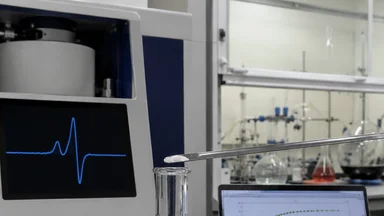
To understand why chloride had such a dramatic effect, Bergman's team mapped the reaction network using a combination of stopped-flow infrared spectroscopy and electron paramagnetic resonance (EPR) spectroscopy. What they found challenged the textbook mechanism.
The widely accepted mechanism for nickel-catalyzed cross-coupling involves a Ni(0) precatalyst that undergoes oxidative addition to an aryl halide, forming a Ni(II) intermediate. This is followed by transmetallation and reductive elimination to release the product and regenerate Ni(0). But Bergman's data showed that the actual catalytic cycle is more complex.
Instead of a direct Ni(0)–Ni(II) cycle, the reaction proceeds through a Ni(I)–Ni(III) cycle. The Ni(0) precatalyst first reacts with the aryl halide to generate a Ni(I) species, which then dimerizes to form a Ni(I) dimer. This dimer is the resting state of the catalyst. The dimer then undergoes oxidative addition with a second equivalent of aryl halide to form a Ni(III) intermediate, which quickly eliminates the product and returns to the Ni(I) dimer.
The chloride ion stabilizes the Ni(I) dimer. Without chloride, the dimer disproportionates into Ni(0) and Ni(II), both of which are dead ends under the reaction conditions. Ni(0) can re-enter the cycle slowly, but Ni(II) accumulates and poisons the catalyst. The net effect is a dramatic loss of active catalyst.
Kinetic measurements from stopped-flow IR showed that the rate of product formation was three times faster in the presence of chloride. The chloride essentially prevents the catalyst from falling into a thermodynamic sink, keeping it in the productive Ni(I) dimer state.
Why Every Previous Study Missed This Step
If chloride is so important, why had no one noticed it before? Bergman's team offers several explanations. First, most labs use commercial Ni(COD)2 without rigorous purity checks. The nickel source itself can contain trace halides from its synthesis, and those levels vary between batches. Second, ligand hydrochloride salts are routinely used without purification; chemists assume that any residual chloride is washed away during workup, but that is not always the case.
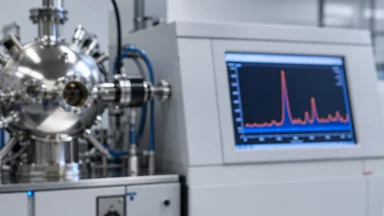
Standard analytical techniques also failed to catch the clue. Gas chromatography–mass spectrometry (GC-MS) can detect organic impurities but cannot distinguish nickel oxidation states. Nuclear magnetic resonance (NMR) is similarly blind to paramagnetic species like Ni(I). The key evidence came from EPR spectroscopy, which is specifically sensitive to unpaired electrons. Bergman's team used EPR to detect the Ni(I) dimer directly—a signal that had been overlooked in previous studies because it appears at a field position that is often dismissed as a baseline artifact.
Computational models, which are widely used to predict catalytic cycles, also missed the step. Most density functional theory (DFT) studies assume a Ni(0)/Ni(II) cycle because that is the simplest path. The Ni(I)–Ni(III) cycle requires a two-electron oxidative addition from a dimer, a possibility that modelers rarely consider. The Bergman team's DFT calculations, performed after the experimental discovery, showed that the chloride-stabilized dimer is roughly 5 kcal/mol lower in energy than the unbound Ni(I) monomers, making the dimer the thermodynamically favored resting state.
The lesson is that even well-studied reactions can hide unexpected complexity when the right analytical tools are applied. As Carter noted in a departmental seminar, “We were lucky the contaminant helped, not hurt. But we should have been looking for this kind of thing all along.”
The Reproducibility Trap for Other Groups
When Bergman's team shared their protocol with other labs, the results were sobering. Only 3 of 12 independent replication attempts achieved yields above 80%. The rest fell back to the typical 40–50% range. The difference, again, traced back to the source of nickel and ligand.
Success correlated with lot-to-lot variability in commercial Ni(COD)2. Some batches contained enough residual chloride to stabilize the dimer; others did not. The ligand hydrochloride salts also varied: one supplier's batch contained nearly 10 mol% chloride, while another had less than 1%. Adding a small amount—roughly 5 mol%—of tetrabutylammonium chloride to the reaction mixture restored the high yield in every case, confirming that chloride was the active ingredient.
The effect, however, is specific to C–N couplings. Bergman's team tested the same chloride additive in a series of C–C cross-coupling reactions (Suzuki, Negishi, and Kumada couplings) and found no improvement. In some cases, the chloride actually suppressed the yield. This suggests that the Ni(I) dimer is particularly important for C–N bond formation, perhaps because the transmetallation step for amines is slower and more sensitive to catalyst speciation.
The team now recommends that all researchers using nickel precatalysts for C–N couplings include a simple chloride assay in their supporting information. A quick measurement using ion chromatography or inductively coupled plasma mass spectrometry (ICP-MS) can reveal whether the reaction mixture contains enough chloride to stabilize the dimer. Without that check, the reported yields may be unreliable.
What This Means for Industrial Process Chemistry
For pharmaceutical companies, the discovery is both a caution and an opportunity. Process chemistry groups routinely screen hundreds of conditions for a single target molecule, often relying on commercial reagents and catalysts. If an unidentified activation step like this one is at play, months of optimization work could be wasted chasing the wrong variables.
Merck's process chemistry division has already begun retesting 12 stalled campaigns that involved nickel-catalyzed C–N couplings. Preliminary results, shared at a recent American Chemical Society meeting, suggest that adding a controlled amount of chloride resurrected several reactions that had previously been abandoned. The company is now evaluating whether other trace impurities—bromide, iodide, or even water—might play similar roles in other catalytic systems.
The implications extend beyond pharmaceuticals. Contract research organizations (CROs) that offer nickel-catalyzed coupling services may need to update their standard protocols. If a client’s reaction fails at a CRO but succeeds in the client’s lab, the difference could be as simple as a batch-to-batch variation in chloride content. Standardizing the chloride level could save both time and money.
Bergman's finding also suggests that many published yields for nickel-catalyzed C–N couplings may be underestimates. If the reaction conditions inadvertently lack chloride, the reported 40–60% yields might be artificially low. Repeating those reactions with a controlled chloride additive could reveal higher true yields, potentially changing synthetic routes that were previously deemed impractical.
Trade-offs and Counter-Arguments
While the chloride effect is clearly beneficial for C–N couplings, it is not a universal panacea. As noted, the same additive can suppress yields in C–C couplings, meaning that process chemists must carefully tailor the chloride concentration to each reaction type. Adding too much chloride—above roughly 10–15 mol%—can also backfire, leading to the formation of inactive Ni(II) chloride complexes that sequester the catalyst. The optimal window is narrow: too little chloride and the dimer disproportionates, too much and the catalyst poisons itself.
Another concern is that the chloride effect may mask other, more important variables. If researchers simply add chloride to every nickel-catalyzed C–N coupling without understanding the underlying mechanism, they might overlook the need to optimize other parameters such as ligand structure, base strength, or temperature. The chloride works by stabilizing a specific intermediate, but if the reaction is already limited by a different step—for instance, slow reductive elimination—adding chloride will not help.
There is also a risk of over-interpreting the MIT results. The study used a model substrate, 4-bromoanisole, and a single amine nucleophile (morpholine). Whether the chloride effect generalizes to other aryl halides (e.g., chlorides, iodides, or heteroaryl halides) or to more sterically hindered amines remains to be tested. Bergman's team has begun exploring a panel of 20 substrates, and early data (shared at a symposium) suggest that the effect is strongest for electron-rich aryl bromides and secondary amines. For electron-poor substrates or primary amines, the yield improvement is more modest—on the order of 10–20% instead of a full doubling.
Critics might also argue that the field has been too quick to embrace the Ni(I) dimer mechanism. Some researchers have pointed out that the EPR signal assigned to the dimer could also arise from a monomeric Ni(I) species with a different coordination geometry. Bergman's team addressed this by performing EPR simulations and comparing them to known Ni(I) dimers in the literature, but definitive structural proof—such as an X-ray crystal structure of the dimer—has not yet been obtained. The team is reportedly working on crystallizing the dimer, but the species is highly air-sensitive and has so far resisted crystallization.
Despite these caveats, the core finding is robust: trace chloride can dramatically improve yields in nickel-catalyzed C–N couplings. The challenge now is to map the boundaries of the effect and to develop practical guidelines for its use.
Broader Implications for Catalysis Research
The story of the chloride contaminant is a reminder that precatalyst activation—the phase between adding the catalyst and the onset of catalysis—is the least mechanistically studied part of most catalytic reactions. Chemists tend to focus on the catalytic cycle itself, assuming that the precatalyst transforms cleanly into the active species. But as this case shows, the activation step can be the bottleneck.
Trace impurities, often dismissed as inconsequential, can be exploited rather than removed. The key is to have the right analytical tools and the willingness to follow unexpected signals. EPR spectroscopy, stopped-flow IR, and ICP-MS are not routine in most organic synthesis labs, but they may become essential for troubleshooting capricious reactions.
Method sections in published papers should, at a minimum, report the purity of the metal source and the halide content of any additives. Journals could encourage authors to include such data as a standard part of the supporting information. The field also needs better real-time speciation tools—techniques like X-ray absorption spectroscopy (XAS) that can track oxidation states during the reaction without disturbing it.
Bergman, now a postdoctoral fellow at Caltech, is philosophical about the discovery. “We were lucky the contaminant helped, not hurt,” she said in an interview. “But luck is just the intersection of preparation and opportunity. We had the preparation—the EPR spectrometer, the stopped-flow IR—and we followed the opportunity when we saw something odd. I think there are many more such stories hiding in the literature, waiting for someone to notice the anomaly.”
The finding also echoes lessons from other fields. In a dark matter search, a single untuned interferometer port was the difference between a null result and a detection. In galaxy formation simulations, an unarchived random seed code collapsed an entire simulation. And in pacific sediment transect studies, a grant agency's rule forced a complete rethink. The common thread: small, overlooked details can have outsized consequences.
The challenge for the catalysis community is to institutionalize the search for such details. That means funding more mechanistic studies, training graduate students in spectroscopic methods, and fostering a culture where anomalies are celebrated rather than dismissed. The next doubling of a reaction yield might be hiding in plain sight—in a trace impurity, a forgotten ligand salt, or a subtle color change that someone decides to investigate.