One Uncalibrated Two-Photon Microscope Laser Priced a Lab Out of Longitudinal Imaging
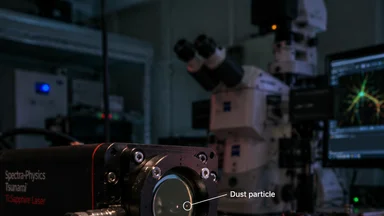
In the spring of 2022, a mid-sized neuroscience lab at a public university in the United States took delivery of a brand-new tunable Ti:Sapphire laser for its two-photon microscope. The instrument, a workhorse for calcium imaging in awake mice, cost roughly $150,000. By autumn, the laser's output power had dropped below the threshold needed for reliable imaging. A service technician quoted $12,000 for a recalibration visit. The lab did not have the funds. For nine months, the laser sat idle while the team scrambled to borrow time on a colleague's rig. A longitudinal study of hippocampal place cell dynamics had to be restarted.
This story is not unusual. Across neuroscience, the high cost of two-photon microscopy infrastructure is quietly shaping which experiments get done and who gets to do them. The problem is not just the initial purchase price—it is the recurring expense of keeping a laser stable enough for the kind of long-term imaging that reveals how neural circuits change over days and weeks.
When a Single Laser Line Costs More Than a Postdoc
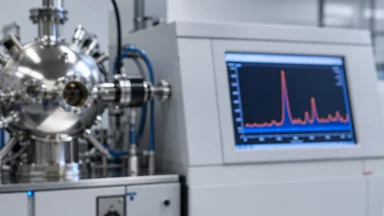
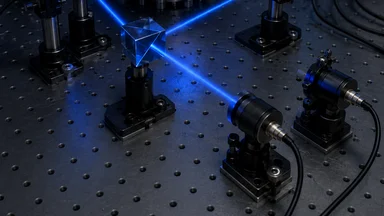
Two-photon microscopy depends on pulsed lasers that deliver high peak power in femtosecond bursts. The most common source is a Ti:Sapphire laser, tunable across roughly 700–1,000 nanometers. A new unit from market leaders such as Coherent or Spectra-Physics typically costs between $100,000 and $150,000. For comparison, the average annual salary for a postdoctoral researcher in the United States is around $55,000. One laser can cost as much as three postdocs.
The expense does not end at purchase. Lasers require cooling systems, vibration isolation tables, and regular alignment checks. Over time, the titanium-sapphire crystal degrades, and the cavity mirrors accumulate dust. Output power drifts, and the wavelength calibration can shift by several nanometers. For calcium imaging, even a small drift in wavelength or power changes the fluorescence signal, introducing artifacts that are hard to distinguish from biological variation.
Manufacturers offer service contracts that cover annual calibration and emergency repairs, but these add 10–15 percent of the purchase price per year. A lab that buys a $120,000 laser and signs a $15,000 annual contract has committed roughly $200,000 over five years—before factoring in other consumables like objective lenses, filters, and animal housing. Many principal investigators underestimate this total cost of ownership when writing grants.
Funding agencies typically limit equipment costs to a fraction of the total budget. An NIH R01 grant, for example, caps equipment at $50,000 unless the applicant justifies a higher amount. That cap forces labs to seek institutional or departmental supplements, which are often competitive and slow. The result is a patchwork of financing that leaves many lasers under-maintained.
The Hidden Cost of Longitudinal Imaging
Longitudinal imaging—tracking the same neurons over days or weeks—places extraordinary demands on laser stability. A typical experiment might involve imaging a mouse every other day for a month. If the laser power drops by 10 percent between sessions, the fluorescence signals from calcium indicators like GCaMP will appear weaker, potentially masking genuine changes in neural activity. If the wavelength drifts, the excitation efficiency for GCaMP shifts, producing similar artifacts.
Re-calibration services from manufacturers cost several thousand dollars per visit, plus travel expenses. Some labs stretch intervals between calibrations to 12 or 18 months, accepting degraded performance. Others share lasers across multiple imaging rigs, which increases wear and scheduling conflicts. A shared laser in a core facility may serve five or six microscopes, each with different optimal wavelengths, requiring frequent retuning that accelerates drift.
Downtime between calibrations is not just inconvenient—it can ruin data. One lab reported that a three-week delay in recalibration caused them to lose two months of longitudinal data because the power drift was not detected until after the experiment ended. The cost of wasted animal subjects, reagents, and personnel time easily exceeds the calibration fee.
Some groups have turned to alternative laser technologies, such as fiber lasers or optical parametric oscillators, which offer different trade-offs in cost and stability. But these are not yet as widely supported by commercial microscope manufacturers, and their long-term reliability for longitudinal studies is still being evaluated.
How Pricing Out Smaller Labs Distorts Neuroscience
The high barrier to entry for two-photon microscopy means that only well-funded labs—typically at large research universities or institutes—can afford the technology. Smaller groups at teaching colleges, in developing countries, or in early-career stages often rely on cheaper but lower-resolution methods like one-photon microscopy or widefield imaging. This creates a systematic bias in the literature toward results produced by high-budget institutions.
Several studies have shown that the reproducibility of neuroscience findings correlates with institutional resources. A 2023 analysis in eLife found that papers from labs with higher grant funding were more likely to report positive results, possibly because they could afford more sophisticated controls and larger sample sizes. But the same analysis noted that these labs also had more resources to detect subtle effects, which may inflate the apparent importance of certain phenomena.
Innovation in imaging hardware often comes from underfunded teams that cannot afford commercial systems. The open-source OpenSPIM project and the Miniscope initiative are examples of low-cost alternatives that have democratized access to certain imaging techniques. But two-photon microscopy remains stubbornly expensive because of the laser cost.
Grant reviewers rarely factor in long-term equipment maintenance when scoring proposals. A reviewer might see a request for a $150,000 laser and deem it reasonable, without considering that the lab will need $15,000 per year to keep it running. This disconnect contributes to the cycle of underfunded infrastructure.
The Case of the $150,000 Laser That Sat Idle
The lab that bought the laser in 2022 is not unique. A similar situation occurred at a European neuroscience institute in 2021, where a Ti:Sapphire laser lost power after eight months. The manufacturer's service contract had lapsed, and the institute's core facility budget was already allocated. The laser sat unused for seven months before a collaborative grant from a different project covered the recalibration.
In another case, a lab at a small liberal arts college purchased a used two-photon system for $80,000, only to discover that the laser required a $10,000 repair within the first year. The college had no dedicated equipment fund, and the principal investigator had to use discretionary startup money, depleting resources meant for student training.
These anecdotes illustrate a broader pattern: the cost of maintaining a laser can exceed the cost of buying it, especially for smaller institutions. The laser is the single most expensive component of a two-photon system, but it is also the most likely to need service. Manufacturers design lasers to be serviced by trained technicians, not by lab members, creating a dependency that adds to the expense.
Some labs have tried to perform their own alignments using published protocols, but the risk of damaging the laser cavity is high. A misaligned mirror can reduce power permanently, and voiding the warranty makes future service even more expensive. The safest path is to pay for professional calibration, but that path is not always open.
Funding Structures That Fail Infrastructure
The National Institutes of Health and the National Science Foundation have programs for shared instrumentation, such as the NIH S10 grants, which can cover up to $600,000 for equipment. But these grants are highly competitive and favor large institutions with existing core facilities. A lab at a mid-sized university may not have the institutional support to apply.
Service contracts add 10–15 percent annually to the laser cost, as noted earlier. Over a five-year period, that is $60,000–90,000 on a $120,000 laser—enough to fund a graduate student for a year. Many PIs skip the service contract and hope the laser stays aligned, a gamble that often fails.
Grant budgets typically separate equipment from personnel and supplies. A PI can request $150,000 for a laser, but if the laser fails after the grant period ends, there is no mechanism to request additional funds for repair. The lab must absorb the cost from other sources, such as indirect cost recovery or discretionary accounts, which are limited.
One proposed solution is for funding agencies to require a maintenance plan as part of any equipment proposal. The NIH's recent policy on data management plans could serve as a model. A similar requirement for equipment stewardship would force PIs to think about total cost of ownership from the start.
What Can Be Done: Smarter Budgeting and Shared Resources
Regional imaging centers with pooled lasers could reduce the per-lab burden. The Janelia Research Campus's advanced imaging facility is one example, but such centers are rare outside a few elite institutions. A network of regional hubs, funded by consortia of universities, could provide access to calibrated lasers on a fee-for-service basis, spreading the maintenance cost across many users.
Open-source laser designs, inspired by the OpenSAFELY approach in epidemiology, are still in early stages. Projects like the Open Two-Photon Initiative aim to build low-cost lasers using off-the-shelf components, but achieving the stability needed for longitudinal imaging is challenging. As of late 2024, no open-source two-photon laser has been validated for chronic in vivo imaging.
Manufacturers could offer calibration-as-a-service subscriptions, similar to software-as-a-service models. Instead of paying a large upfront cost plus annual service, labs would pay a monthly fee that includes regular calibration and priority repair. This would shift the financial burden from lump-sum to predictable operating expenses, which are easier to budget for in grant proposals.
Longitudinal studies need dedicated, not shared, laser time. A laser that is retuned every day for different users will drift more than one used at a fixed wavelength for weeks. Core facilities could reserve certain lasers for long-term projects, but that reduces throughput and increases per-user cost. Balancing access and stability is a logistical challenge that no single solution solves.
The Real Price of a Calcium Imaging Trace
Each two-photon calcium imaging experiment carries hidden infrastructure costs that are rarely accounted for in published methods sections. A single imaging session of 30 minutes might involve $200–500 in laser depreciation, service contract fees, and electricity. When the laser is uncalibrated, that money is wasted, along with the biological specimens and the researcher's time.
Transparent cost reporting in publications could help. If journals required authors to disclose the total cost of equipment used per experiment, including maintenance, grant reviewers and readers would have a clearer picture of the resources behind the results. This might also encourage funders to adjust their budgeting guidelines.
Without systemic change, longitudinal two-photon imaging will remain a luxury tool, available only to the best-funded labs. The consequences for neuroscience are real: the field's understanding of circuit dynamics may be biased toward phenomena observable with expensive, well-maintained lasers. Cheaper alternatives exist, but they come with trade-offs in resolution or depth that limit their applicability.
The story of the $150,000 laser that sat idle is a cautionary tale, but it is also an opportunity. If the community recognizes that equipment cost is not just a logistical detail but a structural determinant of research quality, then funding agencies, universities, and manufacturers might find ways to lower the barrier. Until then, many labs will continue to price themselves out of the very experiments they designed.
Beyond the Laser: The Broader Ecosystem of Hidden Costs
The laser is only the most visible expense. A complete two-photon imaging setup typically includes a microscope body, scanning mirrors, photomultiplier tubes, a water-immersion objective (which alone can cost $10,000–$30,000), and a vibration isolation table. Add to that the cost of anesthetizing or head-fixing animals, specialized cages, and surgical equipment for cranial windows. The total system price often exceeds $400,000. Once installed, annual operating costs—including electricity for cooling, replacement parts, and consumables like immersion oil and filters—can run another $20,000–$40,000. For a lab with a single five-year grant of $1.5 million, the imaging infrastructure can consume a third of the total budget, leaving less for personnel and experiments.
This cost structure creates a perverse incentive: labs that invest heavily in equipment may feel pressured to maximize its use, even if the experiments are not optimally designed. A longitudinal study that requires months of daily imaging can tie up a laser, preventing its use for other projects. Some labs have adopted a "batch" approach, imaging many animals in a short period to amortize the fixed cost, but this can compromise the longitudinal nature of the study.
Another hidden cost is training. Operating a two-photon microscope requires specialized skills that take months to develop. A new graduate student or postdoc must learn alignment, tuning, and data acquisition, often with limited formal instruction. If a laser drifts during training, the novice may not recognize the problem, leading to poor data. Some core facilities offer training workshops, but these add to the operating budget.
The reliance on commercial vendors also introduces a geographic inequity. Labs in the United States, Europe, and Japan have relatively easy access to service technicians, but those in other regions may face long wait times and higher travel costs. A lab in South America reported waiting four months for a service visit, during which time their laser was unusable. This disparity further skews the global neuroscience landscape.
Counter-Arguments: Is the Problem Overstated?
Not everyone agrees that laser cost is a major barrier. Some argue that the price of two-photon lasers has actually decreased in real terms over the past decade, as competition has increased and fiber laser technology has matured. A few manufacturers now offer compact, lower-cost lasers designed specifically for two-photon microscopy, with prices around $60,000–$80,000. These models sacrifice tunability—they operate at a fixed wavelength—but for experiments using GCaMP, a fixed wavelength around 920 nm is often sufficient. The trade-off is reduced flexibility: a fixed-wavelength laser cannot excite red-shifted indicators like jRGECO1a, which require longer wavelengths.
Another counter-argument is that the cost of laser maintenance is a manageable fraction of a typical lab's budget. A well-funded lab with multiple R01 grants may have an annual operating budget of $500,000 or more, making a $15,000 service contract a minor expense. The problem, then, is not the absolute cost but the distribution: smaller labs and early-career investigators are disproportionately affected. This echoes broader issues in academic funding, where the gap between well-resourced and under-resourced institutions continues to widen.
Some researchers also point out that the laser is not the only source of instability. Temperature fluctuations in the lab, vibrations from building HVAC systems, and even the movement of people can affect imaging quality. A well-maintained laser in a poorly controlled environment will still produce noisy data. Thus, focusing solely on laser cost may distract from other infrastructure needs, such as climate control and vibration damping.
Finally, there is the question of whether longitudinal two-photon imaging is always the best tool. For many questions, alternative methods like one-photon microendoscopy, widefield calcium imaging, or even electrophysiology can provide adequate data at a fraction of the cost. The choice of technique should be driven by the scientific question, not by the availability of expensive equipment. However, the allure of high-resolution, deep-tissue imaging can lead researchers to over-rely on two-photon microscopy, even when simpler methods would suffice.
Toward a More Sustainable Model
Addressing the laser cost problem will require action from multiple stakeholders. Funding agencies could increase the equipment cap for grants and require a maintenance plan, as mentioned earlier. They could also establish dedicated "equipment sustainability" supplements that labs can apply for after the initial grant period. Universities could create internal equipment reserve funds, funded by indirect cost recovery, to cover emergency repairs. Manufacturers could offer refurbished lasers at reduced prices, with guaranteed calibration for a set period.
On the technology side, the development of more robust laser designs could reduce the frequency of calibration. For example, some newer Ti:Sapphire lasers use sealed cavities with automated alignment, which can maintain stability for months. However, these designs are still relatively expensive. Another promising direction is the use of optical parametric amplifiers (OPAs) that can generate a broad range of wavelengths from a single pump laser, potentially reducing the need for multiple laser sources. But OPAs are complex and costly, making them impractical for most labs.
The open-source community could also play a larger role. If a validated open-source two-photon laser design emerges, it could dramatically lower the entry barrier. However, such a project would require significant investment in testing and validation, likely from a consortium of universities or a philanthropic foundation. The Chan Zuckerberg Initiative, for instance, has funded open-source imaging projects, but none specifically targeting two-photon lasers.
In the meantime, individual labs can take steps to mitigate the impact. They can budget for maintenance from the start, negotiate service contracts at the time of purchase, and collaborate with neighboring institutions to share resources. They can also invest in regular monitoring of laser performance, using simple power meters and wavelength checkers, to catch drifts early. A small investment in diagnostic tools can prevent costly data loss.
The broader lesson is that research infrastructure is not a one-time capital expense but an ongoing commitment. As neuroscience pushes toward more complex, longitudinal experiments, the field must reckon with the true cost of the tools it relies on. The laser that sat idle for nine months is a symptom of a system that undervalues maintenance. Fixing that system will require not just more money, but a cultural shift in how we think about equipment stewardship.